Tuesday, July 28, 2009

Twisterella.


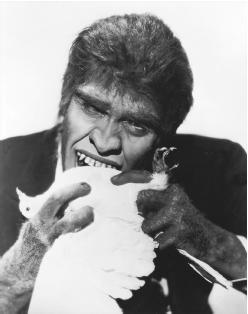
Billy Liar
, the sweet-natured 1963 coming-of-age comedy by John Schlesinger, is a movie worth going back to. The first time I saw it was, nearly half a decade ago, my pals, JT and Helen out in Philly, chose it for a dinner and a movie night. Maybe after enough pints spent hearing my lionization of epic children--having long counted titles like The Unvanquished, Other Voices, Other Rooms, The Catcher in the Rye, A Separate Peace, Lord of the Flies and Chris Ware's stunted bizarro bildungsroman, Jimmy Corrigan, Smartest Kid on Earth as touchstones, they figured it was time my affinity evolved. Maybe it was that the gilding of hard youthful lessons distracted me from the equally hard--if less youthful, lessons that were to follow, that with age must come other generations of spiritual wounds, diversions and errors.

Our culture absorbs movies like this into its deepest tissues, the characters reemerge in satires--as remakes. We dream of having children just to show them this and not everything else.

Ride's seminal Brotpop single, "Twisterella", a jangling Hollies-like dance pop-out, takes its name from the tune Billy co-wrote--a rapturous and innocent bit of bubblegum, perhaps Billy's only invention not to injure his working-class beloveds (or himself for that matter). The Decemberists too, with bookish exhibitionism forged, with "Billy Liar", an only vaguely related character piece, replete with conveniently trisyllabic words and ever baffling Victorian speech mannerisms.

Of course what sets the movie apart from the book written by Keith Waterhouse in 1959 (the same year as the publication of Catcher in the Rye) besides Schlesinger's acrobatic balance of pathos and ridiculousness, are the performances of Tom Courtenay (as Billy) and Julie Christie (as Liz).

Their chemistry (generated here, and again two years later in Dr. Zhivago) popped up in yet another musical ode--two, when you consider the complementary single version and alternate take, Yo La Tengo's "Tom Courtenay". Husband Ira Kaplan sang the A side version, a faithful shoegaze buzzer full of admiration and empty promise forgivability. It's a Billy Liar love letter worthy of Billy's own immoderate hand--written not to the characters but the actors playing them. Schlesinger used the concept of role-playing and staged drama to great effect, showing worlds overlapping one another, but separated by willful deceptions and armored fantasies. Yo La Tengo imaginatively went at it with a kind of blurred distinction between who the real subjects even were: the characters or the actors. Georgia's singing of the same song, an alternate take rescued on the 2005 collection, Prisoners of Love, a paean from Liz' frame of mind. Much as Georgia patterned herself on Liz' charm and liberality, she revealed in between the cracks a kind of pining suspected in Liz, but given that much of that buouyant charm derived from either her mystery or her unknowability--maybe both, never quite glimpsed with such dimension. It gave the tune an empathetic quality that puts its on high in our poplife menagerie of tired reference and painfully self-conscious homage. In the end I've resolved for my own liking that Georgia's is the definitive version regardless of where it wound up, and how it came to us.

Ultimately I love how these movies, and their lovely barnacles compel us to go back, weigh them again, and with diminishing surprise, feel the difference in meaning from year to year. When last I watched a disgraced Billy Fisher desert his love at the train station last I felt the hopeless familiarity accompanying his march back to the house where he grew up, as if watching my own mistakes played back for me. Wasn't he doing what he'd always done? Wasn't he running back to his shell, the boyhood providence, the unprofitable daydreams? And who abandons Julie Christie anyway?! This time around I thought differently. It wasn't the abandonment of love at all, in fact it was the opposite. The daydreamer was going back to the source of his problems, to the things he needed to change about himself, maybe even to care for the people who sheltered him in the nadir of his spinning disconnect.

It's actually a fantastic little scene, one in which, much as Georgia would nab it from Ira in the song, Julie Christie's Liz stole that final scene in the train station from her daydreaming man: The train is set for London, they'll have a life together. Billy's lies, romantic clusterfucks and petty crimes can become a thing of the past. It's a fresh start, except it couldn't possibly be. Liz sees it. Billy fidgets in his seat as the porter calls the last of the passengers in for final boarding. He needs an excuse. One last lie so he can go back and set all the other things right. There is an order to things. He rushes from the train to fetch the two of them some milk for the journey. He retrieves two bottles from the machine, turns and finds the train has left the station. Likely knowing Billy too well to be fooled Liz has left his suitcase on the landing. It's like in that charming breed of human acceptance born most often later in life in many of us and never in as many others, she says without bitterness, "not yet."


Saturday, July 25, 2009

Remind me.


Leave it to someone with a better footing in the rational world to elucidate the psychological purposes of dreams; I come from a perspective that dictates the less I say the better.

I say that now...

This morning and last night and the night before I tried explaining--with the kind of atmospherically charged frustration attendant in certain phantasms of 20th century Russian painter, Marc Chagall, in which a simple Dikanka farmer, perhaps even on his wedding day--in this case the Dikanka farmer is yours truly, though I waste no time in clarifying I haven't marrying aspirations, abandons the conventions and physical template of space to grasp, as one might, reaching into the bounty of the sky a mylar balloon, the moon itself or some kind of celestial goat to punch in lieu of a living person who might, in response, sue or consult law enforcement, a dream of agonizing spiritual dimensions.

I couldn't capture the essence of this dream. It was all around me, but I felt like I was fumbling with dull buttered lobster mitts. A while ago I half-jokingly offered to sell my hands on account of tough times and I now take that back. It was a dream about a woman falling asleep. But the rest is too elusive. And of course the intercession of the rain--both terrestrially and in the narrative of the dream made my brain shut down in a kind of stunned interjection of wildest natural beauty. One of those moments when you abandon your itinerary and accept the serendipity of your surroundings.

Of little consolation, I remembered the dream I had about Joe B., involving the Herman Melville novella, Billy Budd, in which, with characteristically stoic romanticism, from the bow of Billy's conscripted ship, The Rights of Man, Joe and I regard an enormous News Gothic-style lowercase e sticking up from the sea on the horizon as if it was an iceberg or an island. He explains how it fell from the story, and somehow that's just the most remarkably sad thing I ever heard.

Oddly enough this was just meant to be one of those posts about the shit I bought at Jerry's Records this morning. The big find was a white label copy of Van Morrison's 1967 post-Them solo debut, Blowin' Your Mind. It's just kind of eh, but that tune 'T.B. Sheets' is terrific for a hot summer day when you're penned up inside with a few bottles of cerveza and sweating gratefully over the realization that you are not dying a consumptive tubercular death in a sweat-stained bed.

I found a delirious, raucous Hound Dog Taylor live record, nice mono copy of Chuck Berry's Greatest Hits on the Chess label and a heart-exploding Little Anthony & the Imperials record.

Oh shit, there's also this fantastic Fats Waller record on RCA Victor--his mischievous grin luminescent, like Jackie Gleason's in the intro to The Honeymooners, and a late-60's 45 reissue of Erroll Garner's 'Misty', which I've loved--like many people, ever since seeing the fantastic 1971 Clint Eastwood movie, Play Misty For Me. I said to myself, the disc in my hand, someday sooner or later you're gonna feel as dirty and sad as a grizzly bear's asshole. And you're gonna want to hear 'Misty'. So I got that too.

More on the substantiation of the sleeping woman dream as my faculties augur it from the pot tar and too too many late nights boxing it out with the Mule of the Night...

Sunday, July 19, 2009

The year.


Greetings from the great state of Impermeable Sleeptitude. If you're just joining me I was needlessly explaining the significance to some of the familiar faces--folks for whom my insomnia has bred excuse-making and concerns over purple clouds having left shadows on the eyes, of the solid granite paperweights in the form of repeating Z's lying atop the level surfaces in the bedroom. At a glance it looks like a quixotic art project, which is why up til now I have never even mentioned the presence of these stone formations. And only now it is with the mounting agitation of finally acknowledging an elephant in the room. The less that is made of it the better.

Be patient, as the recurring dream about Gogol is about to start. In it he explains how beet-related gas emissions caused an ejection from a ladies' house in Dikanka (down one flight of stairs, the momentum from which rolled him across a brief parquet and to a landing, which upon reaching continued his descent until he was met by the humorless substance called: Dikanka). It comes back to me fairly often, even for a recurring dream. I think the reason is because his narrative grasps at all the most-often disparate though seemingly compatible elements of self-consciousness: his sexuality, his body awkwardness, and his propensity to turn the search for happiness into misfired, if innocuous, slapstick.

The anecdote I tell him isn't as thrilling, one about meeting Tanya Donnelly and thinking for sure we're gonna hook up, but then we don't. It's Washington D.C., probably around 1994 or 95. He rightly points out that it doesn't matter when or where it happens. People like to add that such and such was based on a true story, mostly because it seems, in the hindsight of invention, like it didn't happen.

Even now I wonder if I don't keep having the same dream over and over til I figure it out where the wishbone snaps in perfect halves, and I say just the right thing, and leave out the part about Washington D.C. and the year.

Sunday, July 12, 2009

Everything I associate with you I once associated with storms.


I awoke this morning thinking of rich people eating breakfast. Well, brunch actually. There is an event held nearby each weekend at one of those converted steeler mansions. They throw open their doors to all, but seem only to invite those who could at least plausibly inhabit the grand old place as tenants. The rest of us just look and feel kind of unwanted. The house says no. This event is called 'Bach Beethoven & Brunch' and sounds preposterous. I like the idea of a secular alternative to the conventional forms of worship and I love Bach and brunch. But the confluence of money, cultural showboats and foreboding real estate just sounds gross.

Instead I had a cup of coffee sitting in a bathtub. I was looking at ferns, housesitting in the most literal sense. The first record of the day, which as best as I can date it, goes back to the mid-30's but could be as late as 1943, was called, "Hula Blues" by Sol Hoopii. As I wandered off, occasionally batting away a curious kitten (the only time a cat ever wants a bath is when you're in the bath), I thought of all the disconnect and hard resistance fought by artists who emerged in the good light by virtue of talent alone. And then I thought of the rest of us, how limited we are by those means, and how we're compelled, not always by the direct motivation of happiness, but by the displacement of an audience we do not enjoy. By the lack of a recognized greatness. I was listening to Mozart's Piano Concerto no. 20, in D minor and then a formative favorite, the tumultuous 2nd Piano Concerto by Rachmaninov.

The former, by my limited means of articulation and insight on the subject, shows a quality in Mozart that I suspect may even have been watershed to his composition, the unity of confidence and color invested in the solo instrument in the context of the orchestra. There is no room for preening, though the piano delivers limitless surges. The authorial instinct gave intelligence to the strings in a way familiar to anyone who enjoys, say, Gauguin or (my favorites) those old WWII-era Warner Brothers cartoons, all of which rely so heavily on the currents and rigor of the backgrounds, without which the central characterizations would pale. I know precious little about Mozart, and sometimes to a silly degree wish I could have met him just to watch old cartoons and trade Playboys from the 60's--the ones in which the very idea of nudity is only possible as an outrageous opposition to the equally contrived setpieces in which it is displayed. What a blast.

Of course there's high school, but that Rachmaninov, anymore, reminds me of a wonderful movie from 1945, Brief Encounter, starring the magnetic Celia Johnson and Trevor Howard, the latter whom you may remember as the embattled English cop in The Third Man. When I think back to its evocations--the concerto, it now feels slightly strange to associate it with a romantic scene, an association made concrete in a terrific staircase farewell sequence in the movie. In much the same way young people are occasionally caught off guard by Turner and Constable, I was impressed by something in the 2nd Piano Concerto that felt purely abstract and atmospheric. Like Turner's roiling waves hugging the sun and all but blotting out the doomed evidence of sea-going humankind, this concerto speaks in heavy, ominous gestures. It's amusing to think of it just now. I heard it at an age when nothing romantic had ever done that.

This recording was made for the Remington label (1950-57; the specific date of this recording escapes me), one that creeps up in my crate digs with increased frequency these days. Listeners in the Pittsburgh area are advised to check out the small but impressive Remington section at Jerry's. A budget label devoted to classical recordings, Remington captured in a way few small imprints could the austere stylism and substance of the golden age of the record industry--a time when the currency of art in music recording was king.

Sadly, brunch will not be served today. The photos I took of last night's grilled sockeye salmon and sweet and sour potato ratatouille came out dark and blurry. Customarily I like that in food pictures, lends them a kind of Bruegelesque binge delirium. But I was really relying on my cheapo digital Polaroid to pick up up a little of that ruby red grapefruit color of the fish, offset by the onyx cubes of eggplant. No dice.


On a final editorial note, I extend gratitude to my latest reader, Cap'm. Thanks for your kind words. I'll be following along with you!

Thursday, July 9, 2009

"I keep intending to tell you..."


Just a quick word before I shuffle off to work this morning on my enchantment with Tammy Wynette's angelic 1969 Nashville record, Stand By Your Man. It still dumbfounds me that a record with such a heavy populist soul bent hasn't made a more wide-spread comeback, whereas, say, Etta James' At Last and Dusty Springfield's Dusty in Memphis are both now nearly as widely recognized as records by Aretha Franklin and The Beatles.

One song in particular has been stuck in my head in the craziest way for months now, and especially now--perhaps owing in no small part to the fever pitch adherence I've developed to Camera Obscura's My Maudlin Career, hardly a day goes by that I don't at least cut right to "It Keeps Slipping My Mind" and sad out just for the hell of it. Books are waiting to be written on the subject of sad songs that sound happy (by Joy Division standards 'Love Will Tear Us Apart' is quite chipper sounding) but the Wynette tune, co-written by Nashville wizard, and this session's producer, Billy Sherrill, is just the opposite. So much so that I made the discovery of its bold soul-in-drag interior in a fit of personal self-abuse and indulgence. It involved beer, pie-eyed ogling and "It Keeps Slipping My Mind" on a jukebox. When I got up close to it, and separated its sentiment from the mirage of its overlying country torch song sensibility it made me laugh to myself. The gist is simple, Tammy pulls her old flame aside, she's been meaning to tell him something. The sound is plaintive and soars in the way Nashville tells us heartache soars. She goes on to sing about love's errors and regrets, but in the end she has to admit, she's moved on. All the things she thought she had to say no longer bother her, she's made peace. It's a lap steel-gilded take on the adage that the best revenge is good living.

Tuesday, July 7, 2009

Onglet.


Oui. Shit oui.

These are low fire days and once--not a week ago, okay maybe two, I felt one of those mortal convictions one has (e.g. "I will throw up if I crawl back to religion...or to so and so..."), and believed it was impossible to live without those encumbrances. Eh.

I've been stocking shelves at a grocery store which is hardly as dehumanizing as it sounds. Truthfully I don't care any longer what I do for money. As long as it ends in money, and after money the work is there to make more money I guess it's just shoving verbs at nouns and waiting for the managerial compliments to roll in. They roll in like hatemail, and I get 20% off pretty much everything, save for The Pittsburgh Post Gazette, which is hardly worth a verbal gripe--certainly not worth typing, though nevertheless...

After years of buying the Gray Gal--it's price expands as it grows ever smaller, I don't even wince (outwardly) anymore when paying the floor price for the, geez, there really is no nickname for The Gazette. Malnourished. People definitely see it in the deep end of my gaze, which has gained a troublesome opacity in the last year, the concoction of which involves being willfully depressed, sleeping little and literally eating oily mud along the side of the turnpike between residences. I can't help it, I love Pennsylvania.

Today was another grand dream. I got slightly high the moment I woke up, and walked the dog. I was nearly late for work. I was 15 minutes late. This evening I made some flank steaks in the cast iron skillet with spring onions and almond romesco. Oh shit yeah: corn on the the cob. I tell you, if Chanel could just bottle it she'd be famous all over again. But then it wouldn't feel quite like this.

Forget what I just said.

Ella, sensing my dolor at Frick Park today, acts out one of my absolute favorite scenes from Paths of Glory.

Saturday, July 4, 2009

End intermission.


And so I've reached the conclusion of a brief, intermittently rewarding, phase of The auld lang syne.: A life in verse...eh, not so much for me. At least not a public one. Short of that and with what the past few weeks has shown to be a taming of ways--with no heartfelt desire for any of the old instigations, it's liable to look a bit like nap time around here.

I'll be housesitting for my pals, Wendy and Robert, quite a bit this month. Between their fantastic kitchen, and patio with a grill and a view, don't be surprised if this thing in short turn morphs into a bit of a food blog. And if interjections as to my spending habits at Jerry's strike a familiar chord among readers of the always great 7" Slam--from whom both template and energy have been admittedly drawn then all the better. Food and records is a good way of life and 7" Slam is shining the light.

I realized this past spring having logged resident intern hours watching The Food Network and The Travel Channel that, whether by programming strategy or by innate lack of diverse curiosities, many food personalities (what a creepy, Cronenbergian notion!) project little enthusiasm beyond their milieu. Anthony Bourdain, a guy I once followed with nearly a disciple's reverence, has become a tv gadabout, defensively mocking his own purposeless vignettes, occasionally dropping the same three or four Class of 77' punk band names--while confessing love for necrotic American hacks like Red Hot Chili Peppers and Pearl Jam in an interview with The Onion's AV Club. The man's taste is his own of course, but he was as close to a mainstream personality whose predilections sat with my own. There are others less form-fitted to my interests whose musical affinities are, I suspect, at least passably adventurous. Oddly, the cloyingly autonymic Rachael Ray has emerged one of the sharpest, whose party at the South By Southwest Festival was met by the scorn of haters and hipsters alike; the latters' precarious iconocasm was suddenly met by the possibility that a woman who runs her own line of gourmet dog food and designer cutting boards could, by simply showing a little risk in her listening curiosities, mar their already preposterous generational identity. I'm pretty sure Ray's party went off despite the clamor, and no doubt the food was fantastic.

I really hate these explanatory transitional writings. They invariably feel short on respect for the reader's ability to gauge a broader trend that encompasses the direction of a publication. Something must've happened. I suppose it did. Apologies for the effusion. I'll have some grub for you by the end of the weekend without a doubt. Happy holiday!

Monday, June 8, 2009

Spring cleaning.


I spent some of this afternoon cleaning out unwanted emails from my inbox when I came across E. B. White's obituary. I mailed it to myself back in the winter of 2007, hoping probably to write something about it, but never found the right project. It really deserves to be read. I've often thought Charlotte's Web (or for my money The Letters of E. B. White) constituted art of patriotic significance. There are universal themes and truths at work in White's writings, but the tone and sincerity are uniquely American. These books belong in hotel drawers in lieu of the Bible.  When I travel I do not like to be reminded of the Bible.  

And while I'm revising patriotic signifiers I always thought the playing of the National Anthem should be discontinued at ball parks. Instead I like Ella Fitzgerald's version of The Gershwins' "Of Thee I Sing". It's a better song for one. And the sense of benevolence and good humor it would foster would make the game roll better.  We've already worked beer and National Hebrews into the festivity; what gives with that stiff sobering song?  

It is the kind of thing that makes America sound like Margaret Dumont in a Marx Brothers movie:  Shrill, dim and willfully unattractive. Needy in a way.  

How could we ever be happy to be seen in such a light, let alone how could we celebrate ourselves in it?   

Tuesday, June 2, 2009

The hissing.


Cristian Stefanescu-The Nymphettes (Romanian recent)

It's here, soft hissing,
Having been suspected elsewhere.
Spotted on hikes, and in dimly lit abandonments.
If you listen the sustaining tone can spring
With the strength of the imagination,
Or the stamp of the Moon on the blue background--

If it had a soul it would surely think itself an improvement
Upon the dark.
Undeserving people will enjoy it, tuning it out eventually
While others wait what seems like forever,
Their pulses sensitive to the untolling music of it.

See them facing the wall,
See them facing the harsh
Genuinely believing that everyone must suffer--
And maybe everyone must suffer.
But maybe. It could happen, please wait with me.

It is in the varieties of
Gone.

Saturday, May 30, 2009

Little guy.


I have found the new mosquito:
He pinches between things,
Plumbing against the woodhardy thigh,
Regarding a day in long inches, rugged short sleeve,
And what the wind will do to a little guy.

It's just an idea, what I said,
Stay in contented land with a wife:
You can relax, pop a bulging raisin in your teeth
And suck the brown sugar under the drowsy shadow of
Your tongue.

There's so little to what you want.
At least you put it out there.
That brief juice runs,
Parasite in midmorning
And what is love

And what bellows with love
Drowns with that briefest
Delirious liquor.

Thursday, May 28, 2009

This is also part of the moment.


The imaginary light, who knew 
It was so different?!
With what suspicion did they
Read darkening books,  reject a 
Referee's call,
Call their kids indoors under the orange private property?

Provided that it 

Is the same peering color 
And that it is as bright (and therefore so easily mistaken)
Was there any curiosity in that what
It touched was somehow less suspicious?


Friday, May 22, 2009

If only you believed.


The older you get the the less a day off is a day off.  It becomes an auxiliary, all unfinished business is stuffed in square-peg-in-round-hole style til counter-intuitively the day off contains more work than the work day.  I use mushrooms to get by.

But lets let that wait for now.  This morning began innocently enough with one of my recent favorite distractions, playing songs on Blip.com.  I'm sure it's making someone money, but every now and then I get "props" from a pretty woman with good taste in music and it keeps me another inch from the edge.  Fuckin A.  

So sometime later I walked Ella over to the laundromat for some long overdue washing.  When I say--or evince in pure spirit as is so often and disorientingly my m.o., that this will be the summer of hallucinogenics and the pursuit of happiness I should, again both literally and in pure spirit as evinced, add that I have also taken an unexpected interest in cleanliness.  As my days at the Goose are numbered--soon I will be but another lay person crashed out on the right side of the bar, I have found a new affinity for clean skin, clean hair,  and sartorial trapping free of burnt zucchini's unmistakable aroma.  Got me a haircut, a few items of personal hygiene, and have every intention of getting some new clothes before the tax return money is spent.  No rivulets of salty beer sweat here, just crazy trippy shit happening in my head all day and night.  Doctors will trace a catatonic burn-out condition back to this precise moment.  When we imagine the purpose of writing do we ever really anticipate it as having evidentiary impact?  Isn't the notion that it could come of anything similar to the notion of death, it's been proven time and again, but the prospect of it happening to ones self is, though not unrealistic, a tab bit hard to picture.  Someday this writing will explain a catatonic state.  There.

So I was at the laundromat with Ella, when a not unattractive woman approached me to pet the dog.  It was not long before she told me all about her dogs, the accumulation of pet hair on the rugs and empty nest syndrome.  She was really good natured and Ella liked her.  Now I don't know if it's because I was still drunk from the last night or whether she was communicating strangely (kind of like the Orson Welles movie, The Lady from Shanghai, which for a number of reasons, both technical and performative, involving the sound track of the movie I have no idea what it's about beyond the things a compromising man would do for Rita Hayworth).  Whatever the chemistry, I ended up slightly puzzled by her, and in short turn found myself trying to play catch-up with her meaning.   She raised terms like "task bartering", "child bartering", and "hang it on so and so".  It developed into one of those Double Indemnity scenarios.  If I'd have leaned into her and asked, "You want me to kill your husband, right?", she'd have--still petting the dog with a puckered baby play face mind you, have rebuffed me with, "Not here, we can't discuss it here."

 I don't like speaking ill of exhilaration, but the truth of it was that the Jefferson Starship song "Miracles" was playing on the radio in the laundromat as all this was happening and I just figured the prevailing air of confusion was a small price to pay to hear a song I'd always loved, the album of which I would likely never buy.  We pay.  One way or the other we pay for what we take.

I walked Ella home with the peculiar memory of the woman who wanted me to kill her husband ebbing as a more distant one quickly emerged.  This too involved "Miracles" and the presidential election of 1984.  I was nine, and the song was on the radio.  I got up before everyone else, and ate cereal by the radio.  I had just seen Walter Mondale on tv.  I have no idea, apart from the unbiased sequencing of long-term memory, why I link these events, or even why my imagination chose to fight so strongly to keep intact two banalities equally well-served apart.  But really, is what I don't know now so much worse than what I didn't know before conceding to this?  I am, above all things, striving for inner peace, and the shadow of doubt must find its bay.

Earlier, maybe an hour or so.  It was a Saturday and I had the tv room to myself, waiting for cartoons.  At that hour only the odious Christian-themed cartoons ran, and even then I found them unpalatable and hated the shoddy manner in which they attempted to disguise their moral monochromaticism with such bland characters and shitty artwork.  So I watched an informercial with Walter Mondale, he was discussing America's problems, the poor and such, basically making his case for the presidency.  I liked him.  He didn't seem like the kind of guy who would push you around.  Reagan always struck me as the kind of guy who would--like the kid at school to whom everyone was nice, but only because he was a violent asshole whose self-amusing wrath you'd just as soon avoid.  My dad was awake. "Miracles" was on the radio and summer as I first knew it permeated the absorbency of my alert life.  I thought this has to be a woman singing, but a woman who sounds like a man.  I always thought Carly Simon sounded like a man, too.  Like in a vacuum I could picture Carly Simon as a  dude.  It amused me from a young age to find that not only was Carly Simon a woman but thought of as something of a sex symbol.   Sometimes when flipping through records at a store I'll see cover art depicting an attractive but forgotten singer.  Julie London comes to mind, but I know there are better, more recent examples, just none I can think of off the bat.  I think:  it's instantly clear from this moment in time why this person got a record deal and why it didn't work out.  I wondered to my Dad why he didn't support Mondale instead of Reagan.  After all, my Dad hated douchebags and bullies as much as anyone.  His response is unprintable.  

A palindromic current of conservativism originated that would change courses in a feeling of being had just before my college years.  I still get a laugh though when I pass a record by Carly Simon in a record store.  Whatever dude.  


Monday, May 18, 2009

The thing.


Desiderio da Settignano-Little Boy (Florentine 15th c.) 

Before it rose even one time
It was full of blood, excuses and rain tantrums,

Pacing out how to walk steadily on a cupping limb,
It ought to be assumed the thing was born ignorant to the monolithic complexity:

Leaflet foot soles weightless and held in the air.

Thank that it rose at all, 
Rained at all, for giving you an enemy
So eagerly pitied and therefore
So readily mismanaged.

-----------

Mothers and fathers have gone a long while
Beating back the wild weeded run to a paradise,
They imagine being like Hawaii,
Their eyes already far ahead to that place
In the undisturbed future.

There will be red birds flying across the sun, 
Water rich with the reflections of ferns for them to swim, and still
--I'm sorry,
A predatory siren in the wood 
Lying patient, 

Ignored.

Saturday, May 9, 2009

Signs.


There are two primary qualifiers for the great American city.  The first is the presence of decent Ethiopian food.  I like Ethiopian food, I'm not nuts for it.  Probably why I find it such a reliable indicator, that in its failure to arouse me personally it still manages an emissarial statement.  The second is that of at least one annual birthday dance party honoring Morrissey.  

Pittsburgh, I learned today, qualifies on both terms.  

Lately I've found the signage of this city curious.   The first example concerns our annual birthday party honoring Morrissey.  Among the selling points of the bash, listed first in fact, is 'Fresh Pastries.'  But then at some point after the sign was posted--the copy I saw was posted in the vestibule of Brillobox, 'Delicious Pastries' had been crossed out.  Barring either a myopic act of vandalism or an equally bizarre tribute band named 'Delicious Pastries' I had to conclude that there was a falling out between the venue and the baker, or between the party-thrower and the baker.  Or perhaps between the three of them.  It amused me to imagine--whatever the cost to actual human emotion, the fraught exchange, the revoking of baked goods, and finally, the revised notion of a Morrissey dance party with no baked goods, as had been promised.  Even bakers have problems.  But in the end we all stand to gain from celebrating Morrissey's birthday.  Here's hoping they patch things up in time.

$$$

The other rash of signage I mention touches on a sensitive subject here in Bloomfield:  three slain police officers.  Before I come off glib let me, for the sake of all due respect, say that officers Eric Kelly, Stephen Mayhle and Paul Sciullo III died valiantly on Saturday April 4th of this year, killed by an enthusiast of the Second Amendment and outspoken opponent of our Zionist state.  Infamy being a kind of fame only vaguely--and I'd say imperceptibly, dimmer in apprehension I'll refrain from repeating his name.  Sufficed to say the community has, as the saying goes, come together in the face of it.  There was a service up the street with bagpipes and a choir.  I took Ella for a walk and watched the procession.  I wrote to my parents, and recall a sense of grief I had not felt for fallen law enforcement since September 11th.

In the time since the shootings I've witnessed a distressing proliferation of flyers papers nearly every store front along Liberty Avenue.  It started with one that appeared, as do candidate election placards in regular distribution.  But over the weeks more personalized ones have popped up--a barbershop down the street posts seven--and a sandwich board.  The message, though given to slight variation consists of three basic tenets:  we show gratitude; we remember (vigilantly staving off the abnormality that is a forgetful mind); and we take single-faith comfort in knowing the slain police officers are with God now.  Several businesses have taken to peddling "Fallen Heroes" bracelets.  They're $2.00 each.  

There really is no way to segue through to my point now without coming off as a cynical, aloof collegiate liberal.  So fuck it.  The fact is these signs, these advertisements and souvenirs have become highly distressing.  They fetishize the grief, ignore the very valuable banalities of living, but most importantly they trivialize the world of death that surrounds just these isolated three.It s a funeral that refuses to end--an abnormality.  What began as personal expressions of grief and gratitude for honorable service has turned into a drone loop masking several unsettling elements of the crime and how it affects the community below its surface.  

First, when not mourning slain police officers many of us, to varying degrees of course, live in fear of them.  It makes the slayings no less tragic, and in fact as cop-fearing citizens many of us reveal our unconditional sympathies in just such moments.  We too were moved to great sadness.  The deferment of our fears has lasted nearly as long as the fundraising efforts. 

Another aspect of this incident which has been obscured is the poor custodianship we have, on so many levels, made of the Second Amendment to the Constitution.  As a gun-owner myself it wasn't until the Cheney-Bush Administration's Department of Homeland Security was instituted that the real impetus for this provision was felt in earnest.  Til then I just took it as an outdated entitlement to personal and organized defenses against the government (which it is) misused to ensure unstable persons will, on principle alone, be able to buy dangerous weapons (which it does).  I remain convinced that the Amendment is valuable to individual freedom.  But the all or none approach, as this incident bears out does not work.  Furthermore the one-sided focus on the victims is an unjust distraction from a great problem: The criminal element responsible for, and Constitutionally enabled in, the commission of these heinous acts.

I overheard a wingnut on the radio lay the blame on the police dispatcher for not giving proper advanced warning to the doomed officers.  Imagine the firestorm had air traffic been blamed for 9/11 as opposed to, you know, the terrorists.   

And you know I don't do myself any favors by writing things like that:  There are columnists and comedians who do it much better than do I, more articulately and fearlessly, with firmer insights into the framing legislation and debate.  But Jesus Christ, the signs.

So it is with a confessional heart and the sincerest desire to get off the burning path into the cool spring grasses of inconsequence that I come to the photograph included above.

Seen in the tableau are a bag of wheat flour, a bottle of Angostura bitters, a photograph of Truman Capote taken in the 1950's by, I believe Arnold Newman--or maybe Irving Penn, and in the foreground a plastic bottle of distilled white vinegar wearing an ill-fitting stopper.  You see, last night as I sat watching It's All Fair Weather at Gooski's with Dave & Sarah,  John, the bartender uncorked a bottle of Blanton's bourbon.  The cap is a  pewter racehorse--perhaps a subliminal emblem for its complementary effect on the mint julep, sitting atop a real cork stopper.  On removing it John said, 'I always tell myself to hold onto these.  But what would I do with them?'.  So I grabbed it, knowing I would wake up to find my hoodie pocket smelling of (a better brand of) bourbon the next morning.  So I awoke and so it did, and so it still does.  Somewhere in my reasoning too was the idea of creating a momentary piece of art in which the stately stopper was tucked into a cheap bottle of no real consequence.  King for a day.  There you have it.  I made good, but the effect, even I have to admit, is kind of poor.  I suppose there is some fabulous consolation in that I tried.  

Truth be told I discarded the stopper after snapping off the picture.  And I suppose that when all other messages of expression fail they succeed at least in lighting the end.

Update:  It's Delicious Pastries not Fresh Pastries.  Delicious Pastries.  They're a band.  Kinda sounds like they're in the wrong line of work.  I regret nothing.

You make me feel so blue.


Alexej von Jawlensky Das Oy-Tal (Russian-German 1910)

What a difference a Rozerem and spring cleaning can make.  Uncluttered, chemically well-rested, and at the foot of a day off, I am happy to say the world of music is alive.

Borodin.  I ought to not be talking about this Russian chemist's first string quartet, as it is a weekday diversion.  But it takes up a grand space in me, and as such, warrants honorable mention.  The daily ritual is to soft cook some eggs on macerated tomatoes--I add a pinch of light brown sugar to coax them along, give em a dash of sesame oil and some chili flakes.  It's one of a few dishes I make in which the dog shows no interest.  I eat in peace.

But it's a moody record, and today's going the opposite way.  A few weeks ago I mentioned how charismatic I (finally) found Neko Case.  Well, leave it to Camera Obscura to sneak in and steal her seduction-by-songcraft thunder with their most recent, My Maudlin Career.  Singer Tracyanne Campbell didn't gild lilies this time around, and the songs feel, compared to the sugary Let's Get Out of This Country, a bit restrained.  It's only fair to say that by nearly ANY other standards they are anything but.  However it is amid this mirage of disciplined jubilation and heartachy effusion that Campbell's voice achieves, as does ideal bath water, the temperature of disarmament.  No one that I can think of in indie or even mainstream pop has the hypnotic sexuality she has.  Over the past decade or so of music nerddom I've fallen into a pattern of infatuate, over-estimate and disappoint when it comes to throwback artists.  Maybe it began with Shelby Lynne, or Macy Gray. Hell, maybe Lyle Lovett.  Anyhow, the clause "not since" has come to signify a kind of reliable warning.  So when songwriting teams Boyce & Hart and Lieber & Stoller began to infect my swoony response to Camera Obscura I was alarmed.  Take a line (from 'You Told a Lie') like:

Are my eyes the coldest blue?
You said once this was true.
If it is I don't know what I'll do
'Cause I'm stuck with them,
And they're stuck on you.

Setting aside the physiological effect it has on me, it's a chorus whose literal invocation of blue-eyed soul is an elevation of the tired sub-genre mantle.  Mind you both in production and performance it draws self-conscious attention to its craft.  But when you got it, flaunt it.  This is quite simply the best country soul record I've heard in a long while.

So too was I the recipient of a righteous blood rush from Ghost, whose performance this past Thursday at the Andy Warhol Museum pushed them in the pantheon of bands I've most left the seclusion of home to see out.  It's such a dynamite equation.  Each time I get a slight reservation, handing the dude my ticket.  This is psych rock.  I could be home, high, on the couch.  You know, the ideal context.  Ghost produces such a diverse and inter-colliding host of sounds, moving from Rundgren-esque piano pop, to blast-out Nuge rawk that the opportunity for distraction is simply nowhere to be found.  Even when they spread out Ghost eschews noodling.  It is reassuring too that not only does a band of this cultish a status care enough to play such a career-encompassing set, but that in doing so they could do a solid sequence.  For as small a listenership as the band seems to enjoy there isn't a hell of a lot of filler to their repertoire.  Glad I left the house.

In truth, I am back to spinning the Borodin now.  So much for weekday solipsism.  In between shocks out in the world it is easiest to make happiness out of habit.  And the moodiness sponsored by a chemist, that's something that, for better or worse, refuses to leave you.  

New habits die hard.      

Thursday, April 30, 2009

Sunday.


There is no revenge even half as strong as the Light:
But there are surprises.
This one is hooded by the sour grace of compromise, by twilight hooded and in plain jeans, and

Fed on immigrant food.

The Curse digs its plots on our limelined
Field.  Tomorrow we arrive, the heat of memory a furnace blowing white.

Even the devil has a tender letter in his pocket in case he is found.  Or maybe, especially the devil has.

Sunday, April 26, 2009

Transformation rock.


What is there to say about the day that wasn't said by just living through it.  Yesterday was beyond the brushes, beyond the best words.  I owe it to posterity to say the lesson was duly learned not to double down on a bag of Hopi mushrooms when the first round of Lucky Charms is circling the drain.  Maybe I should've opted for a nap and a salad.  A long walk.  Prayer.  I pulled through and all internal organs meet the dummy class test;  they are operational, I am alive.

Howler's.  Last Night.

It was a great show with friends and neighbors, Dark Lingo, who don't so much sound like, but very much evoke the shambolic domestic dynamism of Royal Trux.  They are an awesome force to behold, tribal and funny--without ever being noodly and silly.  There is an obscure density to their music, and yet, the couple's personalities play clear and magnetic through their music:  It is a sincere hope that they'll wind up at the great Brickbat Books in Philadelphia someday to underscore my sincerest claim that the Pittsburgh live scene is formidable--and that DL embodies the best elements of it.  The Burndowns, another local blast--and heldover admiration from my blogroll (frontman Steve Anderson is the voice of 7" Slam, a blog that gets written far too infrequently), followed.  One thing I love about Pittsburgh is how expertly--and uncannily in unison, this live climate ferrets out fashionable acts, trends that squat on the crests of waves, dudes in skin tight broomstick-leg jeans, and "little black glasses" as Lingo's Nick nails it.  The Burndowns make fantastic and superbly clear, unfussy punk rock.  When rock and roll of any variety works it does so by untethering its own energies from the past, without denying its debt.  The Burndowns made my head ring, and on the brief walk home (which is to say I had only to cross the street) I earmarked Stiff Little Fingers, Jerry Lee Lewis, the first Clash record, The Sonics and inexplicably, Tony Conrad, for the week to come.  With both Dark Lingo and The Burndowns what excited me most--and maybe this is a compliment owed to the music community on the whole as, at this moment, I can think of no egregious exceptions, is that I have such a thin stylistic connection to what any one of them does.  I don't dress like them, the music I listen to day-by-day sounds nothing like theirs.    But the connections they foster are electric, instant and halcyonic.  

I sacked out on the couch with the dog, saw the first half hour of the Rouben Mamoulian version of Dr. Jekyll & Mr. Hyde from 1931 and passed out before the young, itinerant Frederic March succumbed to his own nocturnal chemistries.  When I left him our night was dignified and intact.  We'd been seduced by it, but were--at least when I went to sleep, mannerly and human.  

Monday, April 20, 2009

The glory of mine eyes.


Jenna Kantor (American recent)

Over the last few months I've noticed an interest among critics in the works great artists generated as, or just before, they died.  There was this New York Times 'Science' section feature, a wrenching look at the geriatric Impressionists whose collective zeitgeist for dappling color resonance turned out to know no tougher a mortal adversary than cataracts and the poor state of surgery in the early 20th century.  Then there was Roberta Smith's survey of the final act Picasso exhibition at the Gagosian Gallery--it's a weirdly human coda to a career that often buoyed on fantastic stylisms and extraterrestrial concepts of basic things. Looking at the pictures (Times Online offers an audio tour narrated by Ms. Smith ) the viewer is left with a reverent sense for an artist who arrived at his own naked humanity in the eleventh hour.  The myriad devices which defined Picasso's career meet with suggestions of failing senses, spiritual fatigue--even doubt, and an overarching technical approach that just looks less constrained by gravitational pesterings.   

I've always enjoyed this final sobriety in peak works: Mahler's 9th Symphony, Kafka's aphorisms from Zurich--even his never-to-be-completed The Castle, Nick Drake's Pink Moon, Sebald's careening pseudo-memoir novel, a few short years out from his demise, Austerlitz; we like to think we're seeing more of the artist as he nears the end.  I suspect it's not that we see anything else than normal, nor is the artist's labor any different.  The subject is now just more provocative.  It's more vital, and entirely inclusive.  If only momentarily everyone lives with that fraught set of concerns.  I tell you, as largely indifferent as I've grown to Picasso, there were connections I formed, looking at the Times article, that made me not just reevaluate his labors, they made me reconsider my own.  

 If there is decency of expression, one could say,  and possibility in every response then why refrain any longer?  How shit-biting sad it must be to arrive and then think 

I wasn't always a desperate person with just sheets to fill.

David Berman, a poet and musician whose sentiments I've tacked up here frequently over the years--he's the Silver Jews guy, wrote a poem about Isaac Asimov's death.  There is a lot of sympathy and in it--mostly devoted to a guy whose only public faults were that he dreamed of different worlds and that he was abnormally prolific.  One line in particular resonates:

Perhaps my last words will be random.

Monday, April 6, 2009

The Song of the Earth (in 26 verses).


Was it Facebook or George Perec? Maybe The Devil's Dictionary, Flaubert's The Dictionary of Accepted Ideas. Whatever the case I've been enjoying constructing little glossaries and questionnaires like this lately. They have advanced a sense of order--illusory order, over thoughts otherwise deemed too rambunctious and contrary to have shape. Beneath everything needless to say, I dream of food all the time.


A: Apple butter, stewed with roasted garlic and shallots and spooned on bacon and potato and red cabbage pancakes. You have been unfaithful in marriage, destructive to your parents' assets, cheap with simple appreciations? Nothing can improve your human bullshit. But as one of the eccelsiastists forewarned, you will all be changed.  Did the saintly scribe have in mind what I have in mind?  And who's the real fool if he didn't?

B: Bulleit Bourbon. An anachronistic liquid embodiment of pecan pie with a cereal-sweet rye accent, one of whose primary elements is the tonally permissive denimcolor currents of the night, the air and the cool stars.

C: Carbohydrates in season. Winter potatoes endure the prevailing winds with emergent heads of hard-vein greens. Nature is a mule's argument, unfair as all things are, which need not mean we relinquish our sources of amusement, carbohydrates in season and such.

D: Drawn butter, whose properties are much like the colored shapes of Matisse, isolated in self-harmony. If what Cervantes said about hunger is true, that it is the best sauce, then Matisse is responsible for the best colors, the hungry colors, and drawn butter is the second best sauce. A little grated horseradish can't hurt either.

E: Ege Bamyasi, the 3rd record made by the arty krautrock band, Can. The cover is a kind of shoddy, egonymic (?!) homage to Warhol's soup cans, celebrating the vulgarity of assembly line food production, sighing over the generic inevitabilities of a globalized Europe.

F: Frozen peas. Freezing sugar is a scare tactic, a curbing force. It works, the sugar does its job in the hour when its performance is most required: winter, nothing grows.

G: Green oil. Save parsley stems, pale inner celery fronds, spotted basil leaves, cousins. Let them all steep in pomace, sealed, in a dark pantry for a week or so. That and a slice of lemon is all the cosmetic assistance the summer plate requires.

H: Heinz Tomato Ketchup. The same lording parties who bandy about self-important opinions on the inappropriateness of bottled water, parmesan cheese on seafood dishes, the superiority of gin to vodka in a martini, and the co-mingling of salmon and red sauces must certainly have gotten their starts in this insipid prejudice: the hatred of ketchup. Not only is Pittsburgh's own the "American sauce"--to borrow a proud appellation from my Philadelphian friend, Paul E, it is an ideal complement--to the foods upon which it has been so happily applied in 133 years since it was introduced, and to the other, lesser condiments which so many Chicago doggers and their like exalt with greater, and utterly irrational, preference.

I: Irish butter. I actively avoid eating it, so as not to adulterate my memories. A blue moon shines on nations capable of producing cheeses comparably prodigious as Irish butter, let alone butters comparably prodigious.

J: Jalapeno. When one's work includes the octofurcation of lemons and limes the scantest coverage of the jalapeno's antagonistic oil will reveal microscopic wounds, open them slightly and raise minute searing one-note songs to the ear. You will know when the moment is upon you.

K: Krispy Kreme doughnuts, coffee, Amtrak train, winter. If I could just go back, with the sincerity of the dying I would, regrettably, appreciate it no more than I did the first time.

L: Lea & Perrins Worcestershire Sauce. Older than dirt, says Soccer John. Over 170 years in fact. A colonial request for the procurement of an English curry, an appeal to pharmacists whose names were Lea and Perrins. A fermented fish sauce, an error.  The bounties of patience, vinegar and sea-faring chemistries.  Much like the Coca Cola of Mexico, Lea & Perrins' insists on using real sugar, where our American version employs lowly corn syrup. Ask your English friends to send the real thing:  malt vinegar, sugar, stinky fishes!

M: Mary Janes. Microchip technology rapidly, hopelessly approaches the awesome achievement of Mary Janes only slightly larger in size. Taste elements include caramel, butterscotch and peanuts. We're tricked into believing there was a simpler era of living from which we have erred in departure. And yet in art and Mary Janes the seductiveness of this observation is thriving, and quite reasonable.

N: Neapolitan pizza. Another dispute rages with volcanic heat and reliability, concerning the authentic origins and composition of the pizza. The truth is unknowable, beset by bigotries, loves and idiosyncracies of proud cities. Before shoveling me onto a flame-engulfed barge and tipping me out to sea, stuff a triangle of typing-paper thin margerita from Slice of South Philly, reverently occupied by crushed tomatoes, scant mozzarella and basil into my dead mouth.

O: Olives. Once, one person looked up at an olive and for the first time in human history said yes. Bone hard, unseasoned, uncured, unprecedented, they bespeak a trophyless award older than the James Beard, Michelin stars, older than the Nobel, the Pulitzer prizes: transcendent insanity, the cloth of discovery and all included insane color.

P: Pint of Guinness. Breathlessly, I've already said too much. Drinking a pint of Guinness with eyes open is an offensive, but all too common, form of gilding the lily.

Q: Quinoa. The foundation of Miss Ella's diet, is delectable on human plates as well! And though somewhat controversial in its inaugural execution a quinoa flan with scarred maple veneer made in the unlit winter of Bloomfield, 2008, sits in the company of kings, milfs and those who feed the hungry.

R: Remembrance of Things Past. The finest first four pages of an unreadable novel cycle ever to meet my eyes. The other pages are physically inoffensive and require little space for storage. One need rent nothing, nor impose spatial constraints of any kind upon co-habitants. Put it under the bed. The one who said we must never fear going too far, for the truth lies beyond loved him some cookies.

S: Sam Bok's Homemade's mung bean pancakes. Carry a cot and a glass of water down--oh, and senselessly high expectations, to the Strip District, Pittsburgh, PA, where a grilling station of questionable legality serves oniony rim-crisp diskettes saturated with percolating peanut oil. One draws a vortex in Sriracha sauce, folds it in a piece of wax paper, and in eating walks, if you're me you do, in the direction of Bloomfield. Not because errands direct you, but because basic things correspond to grand conducements laid out long before the moment has arrived. Seriously, tell everyone.

T: "Talk About The Passion". Opheliac R.E.M. song, from their 1983 debut album, Murmur. It plays in recurring dreams of sitting underdressed at dining table at a country inn, feeding bread to wolves who menace everyone but me. I can, most palpably, detect the warm dry inhalations across their closing jaws as oil-soaked hunks of batard disappear. The value in psychological exhilaration is quite high.

U: Ugliness. In a restaurant's kitchen I cut the faces off live soft shell crabs prior to battering them, frying them, arranging them on a salad in '03. That and the oculation of potatoes left below the boughs of plumbing, beside Borax powder and shriveled blue S.O.S. pads comprise a secret ugliness. What you eat and what you love is beautiful, its message, its representation and the virtues you find are scored with a kind of gray fabric. That you might not forget the toll.

V: Vermouth and vegan cooking. At least once must the abstinant of foodstuffs animal in origin be seated before a plate of roasted morels and potatoes dressed in warm vermouth shallot and olive oil vinaigrette. Thereafter the emasculating dreams of taunts by frying eggs and braised oxtails will cease and the night shall grow quiet and brim with sleep.

W: Women. Celebrity has assisted our calloused, less fair gender in the unilateral theft of the culinary arts from the feminine source. Naturally capital punishment is out of the question. The injustices stand. Sorry ladies: Tyler Florence.

X: Xalaiva. Unlike the bec fin which describes the cultivated palate, xalaiva is comfortable stopping inquiries at the outset of the lips: the perfect mouth. African, like humankind, at genesis, it must be cherished for the pagan virtue of loving love and that upon which it is simply pleasant to focus one's attention.

Y: Yeast rolls show the gestalt at work, and in a way evident to even the slightest minds. Thanksgiving's table requires yeast rolls to ensure the custodianship of the plate. The turkey collects the dross. The dross is the gravy, and a few bronze bits of corn. The yeast roll collects it all. This the embodiment, it is an aroma and a gestalt.

Z: Zucchini corn cake and the observation of sweet and savory distinctions. Two things come to mind: the sandwich called the Monte Cristo and a custard stand in Carlisle, PA, called Massey's, whose chocolate custard in a pretzel cone is a pretty transcendent eating experience. Each represents the skillful--and it turns out provocative, highwire act on the meridian between the sweet and the savory. a diplomacy all too commonly abused: people return from taquerias convinced they can shake cinnamon on their casseroles like it was Mrs. Dash; meanwhile the American children of many classic Chinese dishes ought better be served in candy stores. Zucchini corn cake (or bread, as being legitimately neither it could, I suppose, be either) maximizes the high sugar contents in two foodstuffs with such proficiency and prankish ambiguity that the final resolution tends to be an immaterial one. I find this stuff takes to its neighbor, regardless of his character. Ah, the whore's diplomacy.

xxx.

Saturday, March 28, 2009

Fakebook...Fuckbook...Let's call the calling-off off.


Ella still prefers the old ways.

While it's true the internet is killing the art of composition--or maybe just redefining it, for guys like me that's kind of a blessing.  Short bursts have always tended to complement my imagination better than long-form statements.  I get bored trying to reconcile my way of analysis with the conventions of journalism--mainly music writing.  And yet, this lazy innovation doesn't feel quite right to me.  Maybe its a marginal awkwardness, and the art of brevity will mature.  Remains to be seen.

So what's it all about?  I been listening to Todd Rundgren records lately.  I heard "Hello, It's Me" in a Tums ad on tv and that started the ball rolling.  But even before that I've had Philadelphia on the brain, listening to Billy Paul and The O'Jays, as well as Mazarin and some of the terrific demos Alec Ounsworth made when I still lived there.

I don't want to turn my malaise into an apocalyptic thesis, but once again--and with increasing frequency, I am feeling that decline of modern music depression.  It owes, in part, to the fantastic Five Live Yardbirds record, as well as Michael Hurley's spooky good Armchair Boogie.  The two have little in common beyond only the most generic affinity for blues and folk music, and yet, given the seven short years that separated them--the former was released in 1964, the latter in 1971, there is a world of evolving sensibilities so rich and mind-blowing that a civilization could hardly be expected to duplicate it within a generation.  Most often when I discuss music with folks nowadays it is all about re-issues, crate-digging and artifacts.  It is about the past.  I don't mind that, but a little today would be nice.

I am pretty psyched about the Condo Fucks (a.k.a. Yo La Tengo) record--though it could be argued that it too is a progeny of backwards-looking...and is a re-issue to boot.  The covers--a sequence in the spirit of the band's excellent 1990 lp, Fakebook, offer a kind of turpentine-stink garage alter ego to the indie rock pastoralism of the former.   Them folks in Yo La Tengo have great taste so it never feels like they're working toward an idea of cool.  Needless to say Fuckbook rocks.  

Also, the Invasion of the Bodysnatchers-style push for the latest Neko Case has finally caught up with me.  I always felt she showed a fantastic set of musical assets--hard work, good voice, reasonably arch imagination, and yes, easiness on the eyes, but that she lacked some central fiber.  With these songs she comes out with a catchy and compelling vehicle for her Hollywood appeal--in a way that, say, Jennie Lewis or Zooey Dechanel has yet to do.  The neo-Laurel Canyon aesthetic is taking its time in seducing me.  I'm still not entirely sold on the first wave--though a little Graham Nash is always welcome music as the Earth thaws.  Still, it's promising.  I like to think Neko Case has been making these records all along hoping to get one that's right just for me.  Not me personally, but the me that has grown jaded, and has for quite some time needed something that can be loved without the resignation of looking back and wishing it was now.     


Tuesday, March 3, 2009

Our theatrics, our imperfections.


Sometimes the detail supercedes the article, an anti-Gestalt is born: the whole is the beneficiary and dependant of any given part.

When I was in school we took a field trip to the Smithsonian. In the Freer Gallery I had myself a small breakthrough. Already inexplicably involved in the works Whistler made in the East I discovered one of his most abstract pieces, I loved it. It was one of those canvases the artist philosophically called a symphony. 'Symphony in Gray and Green', or 'Symphony in Green', or some similar configuration of damp, maudlin colors; Whistler made these representations from the sea, probably documented from the deck of a ship looking in on the land, often engulfed in a fog.

It was that one canvas--I tried to Google search it, but no result matched the one I remembered, depicting an impressionistic field, a dark, obscure foreground, with a convoluted middle- and background, whose characteristics were both inexact and thrillingly realistic. As it happens in these possessions I didn't want to look away, and in not wanting to look away looked for the unknown.

Why we choose to quantify the innumerable when the daunting prospect so rarely daunts us elsewhere is a thing for which I, in a nutshell, have no explanation. I just remember thinking this is incomplete.

What I was looking at had something else, and I had a duty, suddenly, to stay, look around and find what it was. The roots of purely abstract art, it turns out, are not really abstract at all, they merely indulge the extraordinary aspects of basic things. They draw the viewer to things he commonly assumes he does not understand, stands him there, and asks him, "What's so unusual about this, really?"

As I said there was the vaguest distinction drawn between the close and far-off elements of the picture, but for all my cursory searches no pictorial logic materialized. I enjoyed the colors. I imagined them stuck between the expression of an ageographical mood and the embodiment of primitive sense definition.

Eventually, and quite meagerly, I saw a house. It was perfectly geometrical and reminded me of the tiny plastic pieces in the Monopoly board game. The beach hut was small, and assuredly, it was barely visible in the batten of mist walling in the Japanese coastline. Needless to say, it was there, demonically changing the meaning, adding meaning, disrupting a great many possibilities. I remember thinking to myself, 'it's a romantic death', though today I have no idea what that means.


Growth, I guess, means learning the preventions of perfection, and learning that they are what separates us from perfection by the sheerness of their movement. And that indulging in them tells us, pretty closely I suspect, what others find when they indulge in our theatrics and our imperfections.


Here are ten sublime details in rock and roll.

1. LCD Soundsystem-'All My Friends'-piano error The inaugural piano, as Dan pointed out, might more easily have been sequenced. Instead it was manually performed. The suggestion is of a clipped, robotic pulsation. But there's a tiny error. The rhythm gets messed up for a split second. It reminds me of a painting I saw in a magazine about ten years ago, depicting the turret of a Victorian mansion. The artist was a young autistic woman, her senses of line. scale and perspective were certain, but her color scheme was really strange. It was the kind of thing that kids could do with Photoshop now without even thinking about it. One detail stuck with me. In the grecian-style ornamentation lining the eave was one ridiculously tiny anomaly: one squared corner of the borderwork showed a chipped edge. Certains errors are valuable in revealing how we correspond with the rapture, and how, in the enjoyment, we err.

2. Rob Base & D.J. E.Z. Rock-'It Takes Two'-the first break The Wire magazine named this song in its 'Primer' for James Brown, given that its break--arguably the most famous in all of hip hop, was taken from the Godfather-penned and produced 'Think (About It)', recorded by Lynn Collins. The killer is that first break, when Brown's voice pops out of a murky deistic pronouncement, a hip hop simulation of the Big Bang that not only birthed a song, but an encompassing universe with it.

3. Destroyer-'A Dangerous Woman Up to a Point'-the dangerous woman's pronouncement As if the Brautiganesque title weren't enough for us pop culture junkies!

Dan Bejar's wistful meditation concludes with his title heroine explaining, "People come/People go/People lie nameless in the snow". There is no concrete connection, but I can't shake the evocation of Tom Courtenay's death in Dr. Zhivago. Much like the sea, which acts as executioner and gravedigger in the same indifferent gestures, the snow is a recurring fatal element for Destroyer--the "tall ships made of snow, invading the sun" are a kind of image refrain on Destroyer's Rubies. They produce a phenomenal picture--part illusion, part natural wrath. In its abstract heritage are the bitter Russian front in WWII, Washington's solemn Valley Forge, and, the murmuring desperation of the sunken Kursk. But most directly it's Tom Courtenay dead--the little guy, his round intellectual's glasses strewn, his dismissal from the affairs of Russia comparable in scale and elementally erasable sacrfice.

4. Television-'Little Johnny Jewel'-live version-Verlaine's guitar solo I'm pretty much over the seriousness of rock. I don't get the pseudo-intellectual lyrics in a lot of metal and prog; the pretentious, vapid non-sequiturs of indie rock; the obscurantist showboating of free jazz; the opaque fake-classical build-and-crash of instrumental post rock. But I understand why they all happen. The impulses are strong and, I imagine, perfectly sincere. Verlaine's solo balances the improbable achievement of so many rock impossibles: the incendiary blast of Zepp-rock, the virtuosity of a great 60's Coltrane solo, and the aesthetic grandness of Gustav Mahler. Better still it is alive and irresistible, a fever-pitched outpouring from within a fever pitch.

5. Heptones-'Ting a Ling'-Leroy Sibbles sings the line: "I dont wanna cry" I won't belabor it. Dramatically convincing. He was just a kid. Like when folks marvel at Michael Jackson in his Jackson 5 days the question is always, "How does someone so young appear to know so much about love?"

6. The Clash-'London Calling'-the WAAAH squall in the bridge Does Joe Strummer squeal that, vocally, or is it a guitar?!

7. Madonna-'Material Girl'-the triangle Hopefully it's clear that this list isn't about precedents. I'm more interested the unquantifiable. The incomparable.

And yet, I can't help but think this one deserves the Guinness Book's recognition. A single triangle ting sound should be too generic to associate with any one artist or song, let alone embody the playful essence of either. Nevertheless that sound in 'Material Girl' is instantly recognizable and perfectly descriptive. as much a paean to the singer's flirtatious and demanding premise as it is to Nile Rodgers' efficiently evocative production. In 1985 was the last great blast of disco decadence!

8. R.E.M. 'Pilgrimmage'-the prefatory ghost chorus

I know, however, of a young chronophobiac who experienced something like panic when looking for the first time at homemade movies that had been taken a few weeks before his birth. He saw a world that was practically unchanged--the same house, the same people--and then realized that he did not exist there at all and that nobody mourned his absence.
-Vladimir Nabokov, Speak Memory, p.1

9. His Name Is Alive-'Why People Disappear'-Dylan fragment outro Kind of the reverse of number 8. Of this one I could never be sure. This album has long stood--by my reckoning anyway, as the great watershed of the 4AD Records label, as arduously embodied of the artsy gothic romanticism of the 80's as it was engaged in the label's emergent experimental pop sound of the 90's. As "Why People Disappear" ends a trace element of a song can be heard, one uncannily similar to the opening bars of "Like a Rolling Stone". The fragment is too brief and too gauzy to be certain. But its enough to plant a fantastic seed of a borderless world of pop sounds. His Name is Alive might very well have been caught between worlds, but in a promiscuous fashion augured in the sentiments of a speculative guy like Umberto Eco, the dialogue the Livonians carried out with the encompassing history of song, was as much the song as the song.

10. Ella Fitzgerald & Louis Armstrong-'They All Laughed'-Ella's pathos Ella Fitzgerald, like coffee or juniper berries, is an adult taste: as opposed to, say, Billie Holiday, whose emotional intensity and heartache are something even a child could grasp. As I did. Ella Fitzgerald is much more playful, like Bing Crosby and Harpo Marx her craft is as much a comic one as it is musical. 'They All Laughed' offers a prime example of how expertly Fitzgerald was able to turn that humor on a dime into chilly pathos. She ambles through Ira Gershwin's laundry list of historical punchlines---inventions folks said would never work, but did, comparing each triumphant long shot to her love. It's light and cheery, with lines like:

They all laughed at Christopher Columbus
When he said the world was round
They all laughed when Edison recorded sound
They all laughed at Wilbur and his brother
When they said that man could fly...

We learn what fools have been made from the practice of underestimation, and how commensurate their foolishness is with the success of what they underestimated. The song was composed by the Brothers Gershwin twenty years before Ella and Louis nailed it for all times, for a decidedly lighter-skinned couple, Fred Astaire and Ginger Rogers. So there could hardly have been any racial foresight--or could there have been?, on Ira Gershwin's part when he penned the line:

The all laughed at Rockefeller Center
Now They're fighting to get in.
They all laughed at Whitney and his cotton gin.

That one arbitrarily selected--seemingly arbitrarily selected, image seems to laugh from Ella Fitzgerald with a kind of instinctive and sublime dignity with which only ugly surprises can be met. It is the kind of humor that defies even the most colossal affronts, the most sordid history. With it Ella Fitzgerald not only renewed her status as a high and eloquent statesperson, she captured in an airy turn, the embers of our sins, the waters of incalculable spiritual progress.


Sunday, March 1, 2009

Time machine.


Bo Bartlett-Young Life (American contemporary)


Say the money just ain't what it used to be
Man how we used to tear apart this town
Put a dollar into the machine and you'll remember how

-M, Ward, 'Post-War'


There have been good jukeboxes before in this civilization. Even a few comparably great ones--the Mom's jukeboxes in Philadelphia spring to mind--3 between two locations, each finely tuned to suit the room, each impossibly good. I like Grumpy's in Minneapolis, The Grog Shop's in Cleveland. But the Gooski's jukebox is something else. It feels like a tv show that's been on the air all my life, with characters coming and going. Some of them reappear after years of absence. A few were there when I first tuned in and have remained. What distinguishes it from so many others is how so many people have put their mark on it. Originally it was, I imagine, Marcus, who filled it. He's the one who changes it. But over time Bob and John put in. I got a few numbers in it myself--no one's particularly happy with my hidden Lil Wayne tracks. I imagine there are others as well who have found their way in.

An acrid book could be written on the subject of the tunes that should never again be played. They come up every fifteen minutes. People like em. They get to stay. Sadly, they get to stay. MGMT is the latest, but the list is as old as the jukebox itself: Johnny Cash, the Pixies and Black Sabbath...But why dwell on those.

At the risk of feigning impossible authority these are--if not the ten best, then ten tracks that make it what it is:


1. George McCrae-I Get Lifted
2. Clinic-The Return of Evil Bill
3. The Sonics-Have Love Will Travel
4. Nerves/ Blondie-Hangin' on the Phone (yes, both versions!)
5. Bo Diddley-Hey Bo Diddley


6. New Pornographers-Myriad Harbour
7. Love and Rockets-Kundalini Express
8. The Strokes-Someday


9. The Vibrators-Baby, Baby
10. Roy Orbison-Workin' for the Man