Thursday, April 30, 2009

Sunday.


There is no revenge even half as strong as the Light:
But there are surprises.
This one is hooded by the sour grace of compromise, by twilight hooded and in plain jeans, and

Fed on immigrant food.

The Curse digs its plots on our limelined
Field.  Tomorrow we arrive, the heat of memory a furnace blowing white.

Even the devil has a tender letter in his pocket in case he is found.  Or maybe, especially the devil has.

Sunday, April 26, 2009

Transformation rock.


What is there to say about the day that wasn't said by just living through it.  Yesterday was beyond the brushes, beyond the best words.  I owe it to posterity to say the lesson was duly learned not to double down on a bag of Hopi mushrooms when the first round of Lucky Charms is circling the drain.  Maybe I should've opted for a nap and a salad.  A long walk.  Prayer.  I pulled through and all internal organs meet the dummy class test;  they are operational, I am alive.

Howler's.  Last Night.

It was a great show with friends and neighbors, Dark Lingo, who don't so much sound like, but very much evoke the shambolic domestic dynamism of Royal Trux.  They are an awesome force to behold, tribal and funny--without ever being noodly and silly.  There is an obscure density to their music, and yet, the couple's personalities play clear and magnetic through their music:  It is a sincere hope that they'll wind up at the great Brickbat Books in Philadelphia someday to underscore my sincerest claim that the Pittsburgh live scene is formidable--and that DL embodies the best elements of it.  The Burndowns, another local blast--and heldover admiration from my blogroll (frontman Steve Anderson is the voice of 7" Slam, a blog that gets written far too infrequently), followed.  One thing I love about Pittsburgh is how expertly--and uncannily in unison, this live climate ferrets out fashionable acts, trends that squat on the crests of waves, dudes in skin tight broomstick-leg jeans, and "little black glasses" as Lingo's Nick nails it.  The Burndowns make fantastic and superbly clear, unfussy punk rock.  When rock and roll of any variety works it does so by untethering its own energies from the past, without denying its debt.  The Burndowns made my head ring, and on the brief walk home (which is to say I had only to cross the street) I earmarked Stiff Little Fingers, Jerry Lee Lewis, the first Clash record, The Sonics and inexplicably, Tony Conrad, for the week to come.  With both Dark Lingo and The Burndowns what excited me most--and maybe this is a compliment owed to the music community on the whole as, at this moment, I can think of no egregious exceptions, is that I have such a thin stylistic connection to what any one of them does.  I don't dress like them, the music I listen to day-by-day sounds nothing like theirs.    But the connections they foster are electric, instant and halcyonic.  

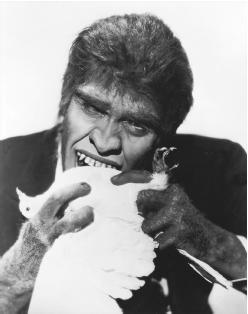
I sacked out on the couch with the dog, saw the first half hour of the Rouben Mamoulian version of Dr. Jekyll & Mr. Hyde from 1931 and passed out before the young, itinerant Frederic March succumbed to his own nocturnal chemistries.  When I left him our night was dignified and intact.  We'd been seduced by it, but were--at least when I went to sleep, mannerly and human.  

Monday, April 20, 2009

The glory of mine eyes.


Jenna Kantor (American recent)

Over the last few months I've noticed an interest among critics in the works great artists generated as, or just before, they died.  There was this New York Times 'Science' section feature, a wrenching look at the geriatric Impressionists whose collective zeitgeist for dappling color resonance turned out to know no tougher a mortal adversary than cataracts and the poor state of surgery in the early 20th century.  Then there was Roberta Smith's survey of the final act Picasso exhibition at the Gagosian Gallery--it's a weirdly human coda to a career that often buoyed on fantastic stylisms and extraterrestrial concepts of basic things. Looking at the pictures (Times Online offers an audio tour narrated by Ms. Smith ) the viewer is left with a reverent sense for an artist who arrived at his own naked humanity in the eleventh hour.  The myriad devices which defined Picasso's career meet with suggestions of failing senses, spiritual fatigue--even doubt, and an overarching technical approach that just looks less constrained by gravitational pesterings.   

I've always enjoyed this final sobriety in peak works: Mahler's 9th Symphony, Kafka's aphorisms from Zurich--even his never-to-be-completed The Castle, Nick Drake's Pink Moon, Sebald's careening pseudo-memoir novel, a few short years out from his demise, Austerlitz; we like to think we're seeing more of the artist as he nears the end.  I suspect it's not that we see anything else than normal, nor is the artist's labor any different.  The subject is now just more provocative.  It's more vital, and entirely inclusive.  If only momentarily everyone lives with that fraught set of concerns.  I tell you, as largely indifferent as I've grown to Picasso, there were connections I formed, looking at the Times article, that made me not just reevaluate his labors, they made me reconsider my own.  

 If there is decency of expression, one could say,  and possibility in every response then why refrain any longer?  How shit-biting sad it must be to arrive and then think 

I wasn't always a desperate person with just sheets to fill.

David Berman, a poet and musician whose sentiments I've tacked up here frequently over the years--he's the Silver Jews guy, wrote a poem about Isaac Asimov's death.  There is a lot of sympathy and in it--mostly devoted to a guy whose only public faults were that he dreamed of different worlds and that he was abnormally prolific.  One line in particular resonates:

Perhaps my last words will be random.

Monday, April 6, 2009

The Song of the Earth (in 26 verses).


Was it Facebook or George Perec? Maybe The Devil's Dictionary, Flaubert's The Dictionary of Accepted Ideas. Whatever the case I've been enjoying constructing little glossaries and questionnaires like this lately. They have advanced a sense of order--illusory order, over thoughts otherwise deemed too rambunctious and contrary to have shape. Beneath everything needless to say, I dream of food all the time.


A: Apple butter, stewed with roasted garlic and shallots and spooned on bacon and potato and red cabbage pancakes. You have been unfaithful in marriage, destructive to your parents' assets, cheap with simple appreciations? Nothing can improve your human bullshit. But as one of the eccelsiastists forewarned, you will all be changed.  Did the saintly scribe have in mind what I have in mind?  And who's the real fool if he didn't?

B: Bulleit Bourbon. An anachronistic liquid embodiment of pecan pie with a cereal-sweet rye accent, one of whose primary elements is the tonally permissive denimcolor currents of the night, the air and the cool stars.

C: Carbohydrates in season. Winter potatoes endure the prevailing winds with emergent heads of hard-vein greens. Nature is a mule's argument, unfair as all things are, which need not mean we relinquish our sources of amusement, carbohydrates in season and such.

D: Drawn butter, whose properties are much like the colored shapes of Matisse, isolated in self-harmony. If what Cervantes said about hunger is true, that it is the best sauce, then Matisse is responsible for the best colors, the hungry colors, and drawn butter is the second best sauce. A little grated horseradish can't hurt either.

E: Ege Bamyasi, the 3rd record made by the arty krautrock band, Can. The cover is a kind of shoddy, egonymic (?!) homage to Warhol's soup cans, celebrating the vulgarity of assembly line food production, sighing over the generic inevitabilities of a globalized Europe.

F: Frozen peas. Freezing sugar is a scare tactic, a curbing force. It works, the sugar does its job in the hour when its performance is most required: winter, nothing grows.

G: Green oil. Save parsley stems, pale inner celery fronds, spotted basil leaves, cousins. Let them all steep in pomace, sealed, in a dark pantry for a week or so. That and a slice of lemon is all the cosmetic assistance the summer plate requires.

H: Heinz Tomato Ketchup. The same lording parties who bandy about self-important opinions on the inappropriateness of bottled water, parmesan cheese on seafood dishes, the superiority of gin to vodka in a martini, and the co-mingling of salmon and red sauces must certainly have gotten their starts in this insipid prejudice: the hatred of ketchup. Not only is Pittsburgh's own the "American sauce"--to borrow a proud appellation from my Philadelphian friend, Paul E, it is an ideal complement--to the foods upon which it has been so happily applied in 133 years since it was introduced, and to the other, lesser condiments which so many Chicago doggers and their like exalt with greater, and utterly irrational, preference.

I: Irish butter. I actively avoid eating it, so as not to adulterate my memories. A blue moon shines on nations capable of producing cheeses comparably prodigious as Irish butter, let alone butters comparably prodigious.

J: Jalapeno. When one's work includes the octofurcation of lemons and limes the scantest coverage of the jalapeno's antagonistic oil will reveal microscopic wounds, open them slightly and raise minute searing one-note songs to the ear. You will know when the moment is upon you.

K: Krispy Kreme doughnuts, coffee, Amtrak train, winter. If I could just go back, with the sincerity of the dying I would, regrettably, appreciate it no more than I did the first time.

L: Lea & Perrins Worcestershire Sauce. Older than dirt, says Soccer John. Over 170 years in fact. A colonial request for the procurement of an English curry, an appeal to pharmacists whose names were Lea and Perrins. A fermented fish sauce, an error.  The bounties of patience, vinegar and sea-faring chemistries.  Much like the Coca Cola of Mexico, Lea & Perrins' insists on using real sugar, where our American version employs lowly corn syrup. Ask your English friends to send the real thing:  malt vinegar, sugar, stinky fishes!

M: Mary Janes. Microchip technology rapidly, hopelessly approaches the awesome achievement of Mary Janes only slightly larger in size. Taste elements include caramel, butterscotch and peanuts. We're tricked into believing there was a simpler era of living from which we have erred in departure. And yet in art and Mary Janes the seductiveness of this observation is thriving, and quite reasonable.

N: Neapolitan pizza. Another dispute rages with volcanic heat and reliability, concerning the authentic origins and composition of the pizza. The truth is unknowable, beset by bigotries, loves and idiosyncracies of proud cities. Before shoveling me onto a flame-engulfed barge and tipping me out to sea, stuff a triangle of typing-paper thin margerita from Slice of South Philly, reverently occupied by crushed tomatoes, scant mozzarella and basil into my dead mouth.

O: Olives. Once, one person looked up at an olive and for the first time in human history said yes. Bone hard, unseasoned, uncured, unprecedented, they bespeak a trophyless award older than the James Beard, Michelin stars, older than the Nobel, the Pulitzer prizes: transcendent insanity, the cloth of discovery and all included insane color.

P: Pint of Guinness. Breathlessly, I've already said too much. Drinking a pint of Guinness with eyes open is an offensive, but all too common, form of gilding the lily.

Q: Quinoa. The foundation of Miss Ella's diet, is delectable on human plates as well! And though somewhat controversial in its inaugural execution a quinoa flan with scarred maple veneer made in the unlit winter of Bloomfield, 2008, sits in the company of kings, milfs and those who feed the hungry.

R: Remembrance of Things Past. The finest first four pages of an unreadable novel cycle ever to meet my eyes. The other pages are physically inoffensive and require little space for storage. One need rent nothing, nor impose spatial constraints of any kind upon co-habitants. Put it under the bed. The one who said we must never fear going too far, for the truth lies beyond loved him some cookies.

S: Sam Bok's Homemade's mung bean pancakes. Carry a cot and a glass of water down--oh, and senselessly high expectations, to the Strip District, Pittsburgh, PA, where a grilling station of questionable legality serves oniony rim-crisp diskettes saturated with percolating peanut oil. One draws a vortex in Sriracha sauce, folds it in a piece of wax paper, and in eating walks, if you're me you do, in the direction of Bloomfield. Not because errands direct you, but because basic things correspond to grand conducements laid out long before the moment has arrived. Seriously, tell everyone.

T: "Talk About The Passion". Opheliac R.E.M. song, from their 1983 debut album, Murmur. It plays in recurring dreams of sitting underdressed at dining table at a country inn, feeding bread to wolves who menace everyone but me. I can, most palpably, detect the warm dry inhalations across their closing jaws as oil-soaked hunks of batard disappear. The value in psychological exhilaration is quite high.

U: Ugliness. In a restaurant's kitchen I cut the faces off live soft shell crabs prior to battering them, frying them, arranging them on a salad in '03. That and the oculation of potatoes left below the boughs of plumbing, beside Borax powder and shriveled blue S.O.S. pads comprise a secret ugliness. What you eat and what you love is beautiful, its message, its representation and the virtues you find are scored with a kind of gray fabric. That you might not forget the toll.

V: Vermouth and vegan cooking. At least once must the abstinant of foodstuffs animal in origin be seated before a plate of roasted morels and potatoes dressed in warm vermouth shallot and olive oil vinaigrette. Thereafter the emasculating dreams of taunts by frying eggs and braised oxtails will cease and the night shall grow quiet and brim with sleep.

W: Women. Celebrity has assisted our calloused, less fair gender in the unilateral theft of the culinary arts from the feminine source. Naturally capital punishment is out of the question. The injustices stand. Sorry ladies: Tyler Florence.

X: Xalaiva. Unlike the bec fin which describes the cultivated palate, xalaiva is comfortable stopping inquiries at the outset of the lips: the perfect mouth. African, like humankind, at genesis, it must be cherished for the pagan virtue of loving love and that upon which it is simply pleasant to focus one's attention.

Y: Yeast rolls show the gestalt at work, and in a way evident to even the slightest minds. Thanksgiving's table requires yeast rolls to ensure the custodianship of the plate. The turkey collects the dross. The dross is the gravy, and a few bronze bits of corn. The yeast roll collects it all. This the embodiment, it is an aroma and a gestalt.

Z: Zucchini corn cake and the observation of sweet and savory distinctions. Two things come to mind: the sandwich called the Monte Cristo and a custard stand in Carlisle, PA, called Massey's, whose chocolate custard in a pretzel cone is a pretty transcendent eating experience. Each represents the skillful--and it turns out provocative, highwire act on the meridian between the sweet and the savory. a diplomacy all too commonly abused: people return from taquerias convinced they can shake cinnamon on their casseroles like it was Mrs. Dash; meanwhile the American children of many classic Chinese dishes ought better be served in candy stores. Zucchini corn cake (or bread, as being legitimately neither it could, I suppose, be either) maximizes the high sugar contents in two foodstuffs with such proficiency and prankish ambiguity that the final resolution tends to be an immaterial one. I find this stuff takes to its neighbor, regardless of his character. Ah, the whore's diplomacy.

xxx.

Saturday, March 28, 2009

Fakebook...Fuckbook...Let's call the calling-off off.


Ella still prefers the old ways.

While it's true the internet is killing the art of composition--or maybe just redefining it, for guys like me that's kind of a blessing.  Short bursts have always tended to complement my imagination better than long-form statements.  I get bored trying to reconcile my way of analysis with the conventions of journalism--mainly music writing.  And yet, this lazy innovation doesn't feel quite right to me.  Maybe its a marginal awkwardness, and the art of brevity will mature.  Remains to be seen.

So what's it all about?  I been listening to Todd Rundgren records lately.  I heard "Hello, It's Me" in a Tums ad on tv and that started the ball rolling.  But even before that I've had Philadelphia on the brain, listening to Billy Paul and The O'Jays, as well as Mazarin and some of the terrific demos Alec Ounsworth made when I still lived there.

I don't want to turn my malaise into an apocalyptic thesis, but once again--and with increasing frequency, I am feeling that decline of modern music depression.  It owes, in part, to the fantastic Five Live Yardbirds record, as well as Michael Hurley's spooky good Armchair Boogie.  The two have little in common beyond only the most generic affinity for blues and folk music, and yet, given the seven short years that separated them--the former was released in 1964, the latter in 1971, there is a world of evolving sensibilities so rich and mind-blowing that a civilization could hardly be expected to duplicate it within a generation.  Most often when I discuss music with folks nowadays it is all about re-issues, crate-digging and artifacts.  It is about the past.  I don't mind that, but a little today would be nice.

I am pretty psyched about the Condo Fucks (a.k.a. Yo La Tengo) record--though it could be argued that it too is a progeny of backwards-looking...and is a re-issue to boot.  The covers--a sequence in the spirit of the band's excellent 1990 lp, Fakebook, offer a kind of turpentine-stink garage alter ego to the indie rock pastoralism of the former.   Them folks in Yo La Tengo have great taste so it never feels like they're working toward an idea of cool.  Needless to say Fuckbook rocks.  

Also, the Invasion of the Bodysnatchers-style push for the latest Neko Case has finally caught up with me.  I always felt she showed a fantastic set of musical assets--hard work, good voice, reasonably arch imagination, and yes, easiness on the eyes, but that she lacked some central fiber.  With these songs she comes out with a catchy and compelling vehicle for her Hollywood appeal--in a way that, say, Jennie Lewis or Zooey Dechanel has yet to do.  The neo-Laurel Canyon aesthetic is taking its time in seducing me.  I'm still not entirely sold on the first wave--though a little Graham Nash is always welcome music as the Earth thaws.  Still, it's promising.  I like to think Neko Case has been making these records all along hoping to get one that's right just for me.  Not me personally, but the me that has grown jaded, and has for quite some time needed something that can be loved without the resignation of looking back and wishing it was now.     


Tuesday, March 3, 2009

Our theatrics, our imperfections.


Sometimes the detail supercedes the article, an anti-Gestalt is born: the whole is the beneficiary and dependant of any given part.

When I was in school we took a field trip to the Smithsonian. In the Freer Gallery I had myself a small breakthrough. Already inexplicably involved in the works Whistler made in the East I discovered one of his most abstract pieces, I loved it. It was one of those canvases the artist philosophically called a symphony. 'Symphony in Gray and Green', or 'Symphony in Green', or some similar configuration of damp, maudlin colors; Whistler made these representations from the sea, probably documented from the deck of a ship looking in on the land, often engulfed in a fog.

It was that one canvas--I tried to Google search it, but no result matched the one I remembered, depicting an impressionistic field, a dark, obscure foreground, with a convoluted middle- and background, whose characteristics were both inexact and thrillingly realistic. As it happens in these possessions I didn't want to look away, and in not wanting to look away looked for the unknown.

Why we choose to quantify the innumerable when the daunting prospect so rarely daunts us elsewhere is a thing for which I, in a nutshell, have no explanation. I just remember thinking this is incomplete.

What I was looking at had something else, and I had a duty, suddenly, to stay, look around and find what it was. The roots of purely abstract art, it turns out, are not really abstract at all, they merely indulge the extraordinary aspects of basic things. They draw the viewer to things he commonly assumes he does not understand, stands him there, and asks him, "What's so unusual about this, really?"

As I said there was the vaguest distinction drawn between the close and far-off elements of the picture, but for all my cursory searches no pictorial logic materialized. I enjoyed the colors. I imagined them stuck between the expression of an ageographical mood and the embodiment of primitive sense definition.

Eventually, and quite meagerly, I saw a house. It was perfectly geometrical and reminded me of the tiny plastic pieces in the Monopoly board game. The beach hut was small, and assuredly, it was barely visible in the batten of mist walling in the Japanese coastline. Needless to say, it was there, demonically changing the meaning, adding meaning, disrupting a great many possibilities. I remember thinking to myself, 'it's a romantic death', though today I have no idea what that means.


Growth, I guess, means learning the preventions of perfection, and learning that they are what separates us from perfection by the sheerness of their movement. And that indulging in them tells us, pretty closely I suspect, what others find when they indulge in our theatrics and our imperfections.


Here are ten sublime details in rock and roll.

1. LCD Soundsystem-'All My Friends'-piano error The inaugural piano, as Dan pointed out, might more easily have been sequenced. Instead it was manually performed. The suggestion is of a clipped, robotic pulsation. But there's a tiny error. The rhythm gets messed up for a split second. It reminds me of a painting I saw in a magazine about ten years ago, depicting the turret of a Victorian mansion. The artist was a young autistic woman, her senses of line. scale and perspective were certain, but her color scheme was really strange. It was the kind of thing that kids could do with Photoshop now without even thinking about it. One detail stuck with me. In the grecian-style ornamentation lining the eave was one ridiculously tiny anomaly: one squared corner of the borderwork showed a chipped edge. Certains errors are valuable in revealing how we correspond with the rapture, and how, in the enjoyment, we err.

2. Rob Base & D.J. E.Z. Rock-'It Takes Two'-the first break The Wire magazine named this song in its 'Primer' for James Brown, given that its break--arguably the most famous in all of hip hop, was taken from the Godfather-penned and produced 'Think (About It)', recorded by Lynn Collins. The killer is that first break, when Brown's voice pops out of a murky deistic pronouncement, a hip hop simulation of the Big Bang that not only birthed a song, but an encompassing universe with it.

3. Destroyer-'A Dangerous Woman Up to a Point'-the dangerous woman's pronouncement As if the Brautiganesque title weren't enough for us pop culture junkies!

Dan Bejar's wistful meditation concludes with his title heroine explaining, "People come/People go/People lie nameless in the snow". There is no concrete connection, but I can't shake the evocation of Tom Courtenay's death in Dr. Zhivago. Much like the sea, which acts as executioner and gravedigger in the same indifferent gestures, the snow is a recurring fatal element for Destroyer--the "tall ships made of snow, invading the sun" are a kind of image refrain on Destroyer's Rubies. They produce a phenomenal picture--part illusion, part natural wrath. In its abstract heritage are the bitter Russian front in WWII, Washington's solemn Valley Forge, and, the murmuring desperation of the sunken Kursk. But most directly it's Tom Courtenay dead--the little guy, his round intellectual's glasses strewn, his dismissal from the affairs of Russia comparable in scale and elementally erasable sacrfice.

4. Television-'Little Johnny Jewel'-live version-Verlaine's guitar solo I'm pretty much over the seriousness of rock. I don't get the pseudo-intellectual lyrics in a lot of metal and prog; the pretentious, vapid non-sequiturs of indie rock; the obscurantist showboating of free jazz; the opaque fake-classical build-and-crash of instrumental post rock. But I understand why they all happen. The impulses are strong and, I imagine, perfectly sincere. Verlaine's solo balances the improbable achievement of so many rock impossibles: the incendiary blast of Zepp-rock, the virtuosity of a great 60's Coltrane solo, and the aesthetic grandness of Gustav Mahler. Better still it is alive and irresistible, a fever-pitched outpouring from within a fever pitch.

5. Heptones-'Ting a Ling'-Leroy Sibbles sings the line: "I dont wanna cry" I won't belabor it. Dramatically convincing. He was just a kid. Like when folks marvel at Michael Jackson in his Jackson 5 days the question is always, "How does someone so young appear to know so much about love?"

6. The Clash-'London Calling'-the WAAAH squall in the bridge Does Joe Strummer squeal that, vocally, or is it a guitar?!

7. Madonna-'Material Girl'-the triangle Hopefully it's clear that this list isn't about precedents. I'm more interested the unquantifiable. The incomparable.

And yet, I can't help but think this one deserves the Guinness Book's recognition. A single triangle ting sound should be too generic to associate with any one artist or song, let alone embody the playful essence of either. Nevertheless that sound in 'Material Girl' is instantly recognizable and perfectly descriptive. as much a paean to the singer's flirtatious and demanding premise as it is to Nile Rodgers' efficiently evocative production. In 1985 was the last great blast of disco decadence!

8. R.E.M. 'Pilgrimmage'-the prefatory ghost chorus

I know, however, of a young chronophobiac who experienced something like panic when looking for the first time at homemade movies that had been taken a few weeks before his birth. He saw a world that was practically unchanged--the same house, the same people--and then realized that he did not exist there at all and that nobody mourned his absence.
-Vladimir Nabokov, Speak Memory, p.1

9. His Name Is Alive-'Why People Disappear'-Dylan fragment outro Kind of the reverse of number 8. Of this one I could never be sure. This album has long stood--by my reckoning anyway, as the great watershed of the 4AD Records label, as arduously embodied of the artsy gothic romanticism of the 80's as it was engaged in the label's emergent experimental pop sound of the 90's. As "Why People Disappear" ends a trace element of a song can be heard, one uncannily similar to the opening bars of "Like a Rolling Stone". The fragment is too brief and too gauzy to be certain. But its enough to plant a fantastic seed of a borderless world of pop sounds. His Name is Alive might very well have been caught between worlds, but in a promiscuous fashion augured in the sentiments of a speculative guy like Umberto Eco, the dialogue the Livonians carried out with the encompassing history of song, was as much the song as the song.

10. Ella Fitzgerald & Louis Armstrong-'They All Laughed'-Ella's pathos Ella Fitzgerald, like coffee or juniper berries, is an adult taste: as opposed to, say, Billie Holiday, whose emotional intensity and heartache are something even a child could grasp. As I did. Ella Fitzgerald is much more playful, like Bing Crosby and Harpo Marx her craft is as much a comic one as it is musical. 'They All Laughed' offers a prime example of how expertly Fitzgerald was able to turn that humor on a dime into chilly pathos. She ambles through Ira Gershwin's laundry list of historical punchlines---inventions folks said would never work, but did, comparing each triumphant long shot to her love. It's light and cheery, with lines like:

They all laughed at Christopher Columbus
When he said the world was round
They all laughed when Edison recorded sound
They all laughed at Wilbur and his brother
When they said that man could fly...

We learn what fools have been made from the practice of underestimation, and how commensurate their foolishness is with the success of what they underestimated. The song was composed by the Brothers Gershwin twenty years before Ella and Louis nailed it for all times, for a decidedly lighter-skinned couple, Fred Astaire and Ginger Rogers. So there could hardly have been any racial foresight--or could there have been?, on Ira Gershwin's part when he penned the line:

The all laughed at Rockefeller Center
Now They're fighting to get in.
They all laughed at Whitney and his cotton gin.

That one arbitrarily selected--seemingly arbitrarily selected, image seems to laugh from Ella Fitzgerald with a kind of instinctive and sublime dignity with which only ugly surprises can be met. It is the kind of humor that defies even the most colossal affronts, the most sordid history. With it Ella Fitzgerald not only renewed her status as a high and eloquent statesperson, she captured in an airy turn, the embers of our sins, the waters of incalculable spiritual progress.


Sunday, March 1, 2009

Time machine.


Bo Bartlett-Young Life (American contemporary)


Say the money just ain't what it used to be
Man how we used to tear apart this town
Put a dollar into the machine and you'll remember how

-M, Ward, 'Post-War'


There have been good jukeboxes before in this civilization. Even a few comparably great ones--the Mom's jukeboxes in Philadelphia spring to mind--3 between two locations, each finely tuned to suit the room, each impossibly good. I like Grumpy's in Minneapolis, The Grog Shop's in Cleveland. But the Gooski's jukebox is something else. It feels like a tv show that's been on the air all my life, with characters coming and going. Some of them reappear after years of absence. A few were there when I first tuned in and have remained. What distinguishes it from so many others is how so many people have put their mark on it. Originally it was, I imagine, Marcus, who filled it. He's the one who changes it. But over time Bob and John put in. I got a few numbers in it myself--no one's particularly happy with my hidden Lil Wayne tracks. I imagine there are others as well who have found their way in.

An acrid book could be written on the subject of the tunes that should never again be played. They come up every fifteen minutes. People like em. They get to stay. Sadly, they get to stay. MGMT is the latest, but the list is as old as the jukebox itself: Johnny Cash, the Pixies and Black Sabbath...But why dwell on those.

At the risk of feigning impossible authority these are--if not the ten best, then ten tracks that make it what it is:


1. George McCrae-I Get Lifted
2. Clinic-The Return of Evil Bill
3. The Sonics-Have Love Will Travel
4. Nerves/ Blondie-Hangin' on the Phone (yes, both versions!)
5. Bo Diddley-Hey Bo Diddley


6. New Pornographers-Myriad Harbour
7. Love and Rockets-Kundalini Express
8. The Strokes-Someday


9. The Vibrators-Baby, Baby
10. Roy Orbison-Workin' for the Man

Saturday, February 28, 2009

ED fROM OHIO SIGNED THE DECLARATION OF INDEPENDENCE.


I was thinking the other day about knowing when to stop:  Cooking, paintings and even these little memoirs, have shown me so readily how a late regret can materialize unannounced, and irreversible.  I know immediately I went too far.  If I had laid the brush down, not introduced red, killed the heat, undoubled the metaphor, perhaps it would have been perfect.

What reminded me of it was a poem by Leonard Cohen--actually I think it first appeared as a song on his Recent Songs album, but I only know the poem.  

I came so far for beauty
I left so much behind:
my patience and my family,
my masterpiece unsigned   

There have been days when I was so in love with a handmade thing (lately it has been a series of absurd show flyers papering Gooski's) that I felt with authorial certainty in bursts human artifice was superior to nature.  It wasn't til I begrudgingly recalled the discipline I'd alternately neglected and lost that I realized I had been wrong.  Not in the superiority of handmade things, rather the sacredness and the accidental way I came to the Hill. 

Thursday, February 26, 2009

October 23, 1963.


Someone must've been cleaning out an attic space on Polish Hill recently; I found this check--it was written and cancelled a little less than a month prior to the Kennedy assassination. Sometimes chaotic tragedy is the best way to demarcate time. The natural chemistry took innovative care in its development, thinking, we need an interceding force. Something memorable: This time a simple snow won't do. Thusly did we learn about how snow is older than misfortune.

On the afternoon of 9/11 I recall, in the second, more mundane, wave of realization, in which the world was starting to take its new shape, thinking of Borges' short story, 'The Aleph', and my grandparents, none of whom exactly knew the world as it quite unexpectedly was.


The picture must've been snapped at the house in Sharon, probably 1978 or thereabouts. My brother popped out in '77. Each time I think of that house something is in a different place. It gets larger and larger with time, its details fewer and parsed by the emptying space--can I expect an extinguishing white mural when I finally go? Actually, I suspect death isn't so much blank as it is garish. Like bad carpet or wallpaper.


Each time I paint a picture like this I imagine a volunteer panel of archetypal Austrian psychiatrists hovering over it, examining how small I made the mouths, and how wanly these figures seem to pry for sustenance. Or even light. Just once I'd like the panel to be made up of "the fashion police", eager to spread wide my ideas of a somber coverage.

Janine: You know Wilfred, this is the kind of sensible attire a man is liable to wear when, against the pit of sensibility and the advocacy of his own personal welfare, he looks back.

Wilfed: Looks back indeed, Janine. I couldn't agree more. Bawdy Smallmouth Glycerine is a dominant color this fall.


Sunday, February 22, 2009

...nor his field.


This small, extremely self-polarizing statement is dedicated to one of the few world class music writers I know, Francis Davis, in congratulations on his recent Grammy for the liner notes to Columbia's Miles Davis-Kind of Blue 50th Anniverasy Edition.  Francis is a writer with an unparalleled gift, and a genuinely good person, which among the vocation knows even fewer parallels still.


I've lost the will to criticize music at age 33.  

The reason is, I think, because on some fundamental level by doing so I find myself trying to anticipate the experience of hearing.  The older I get the less I care about the lives of musicians, the reasons they do what they do.  I don't fuss as much over their mistakes and I don't appreciate the perfection.

Over the weekend I came across a fantastic little essay written by H. L. Mencken for a publication called Smart Set, in 1919, called "The Music Lover".   Mencken especially advised the humanists who seek to teach a love of music to the unformed student heart, as if conveniently in the rote-learned appreciation of Scarlatti might also flower a resistance to commit violent crimes or masturbate immoderately.  

Some people will move to music, others simply won't.  They don't need to learn the notes of the scale, the traditionalist convictions of Brahms or difference between modal and tonal jazz.  No amount of classroom pummeling is going to affect the inner lantern.  

The mark of a music lover then is the urge to create his own music, Mencken went on to say.  But seeing as he wrote the essay well before the advent of ubiquitous music journalism he might suffer a small modification:  There are many of us whose sole function is to bray indulgently, often without conviction on any number of subjects.  On music, our numbers are legion and most highly braying.  It could be that we music writers are the ones most sorely in need of the creative act we observe: the clumsy, arhythmic and often just plain self-conscious who hide our personal music in our bedrooms or in our heads.

Whatever we think of active musicians, those of us who love music find in it something transcendent.  As such the act of creating it isn't so much an artifice, such as seeing a tree in nature and drawing its likeness, as it is a possessed and probably uncontrollable communication of something grander.  It is a natural passage through the body of the musician.  As critics we envy that with a searing redness.  And when we feel the musician has erred in the conveyance we pounce.

So, without impulse, age 33, I have grown mostly comfortable with the notion of listening and listening only--a pronouncement that even now I defy arrogantly.  To be in love with something requires that you do not distract it by anything but the disturbance of love.  Some critics would argue that's exactly what they do.  But often the written word reads different.  There is bitterness and personal neediness with no place in the writing.  The urge to find beauty is supplanted by a thirst to name-stamp new discoveries.  The masculine urge to recharacterize the sound in one's own voice and likeness obliterates the kernel of reverence--I speak from some experience.

I have come to a place where, at 6:15 on Saturday evening, on every Saturday evening--as I am forming habits with age, I pull a record from its sleeve, play it, wishing I had no idea who the people responsible for the sounds were, wishing even the names and pictures were gone.

There is one tendon of resistance to the joyous abyss of hearing it on those anonymous terms:  

I go over to the computer, invariably and with the urgeless propriety of myself, age 17,  and change my Facebook status to read:

Bryan is listening to

It's an irresistible force, not unlike a song.

Wednesday, February 18, 2009

The way we were.


It might've been that auspicious first single, or the even the dramatic art work--the Deutsche Grammophon-inspired Ringleader cover was a nice, if flagrant, nod to the august stuff inside.  But this image of a lording Moz with a swaddled child in his arm is as cryptic as it is indulgent.   

I eagerly disparaged apologists who covered for the two most recent Moz lp's--as vigorously as I defended the spotty, but occasionally magnetic, Maladjusted.  Morrissey has been suffering at the hands of critical and spectatorial frenzies all his professional life.  And if anything their erratic pronouncements have tilted even further in his favor over the past few years.  

Morrissey represents the belated child of a generation--the love mistake errantly shot, young, into the Thatcher/Reagan years.  His glam post-punk emerged from Roxy Music and the New York Dolls in much the way that Neutral Milk Hotel's obscene yodel emerged from his early-Smiths vocal style; or Richard Hawley's rockabilly crooner reboot from solo Moz tunes like "The Loop", or the earlier's James Dean-idolatry, "Nowhere Fast".  Apart from late Quentin Crisp and maybe late Truman Capote in Murder By Death, the solidified notion of a cool old queen in popular culture remains inchoate--Antony's growing up fast and scarred in the spotlight, but as the Man said, these things take time.  In their (perfectly reasonable) gambits for the posterity purse the New York Dolls have come to resemble Aerosmith.  Nothing wrong with it, just not exactly what one likes to think of when envisioning the natural progression of glamorous scum.  

But Morrissey, despite all missteps along the way, might just be that vision.  Now more than ever.  Why else would we still wait up?  Why else would critics still forge sweatily to find his hidden, sometimes tissue-thin, virtues?  

Having paced his career spectacularly--if unwittingly so, the Morrissey emerging here relishes a bolstered Smiths revival, invigorated in his ongoing business with this rotating band.  But its not just a planetary alignment that makes this outing different from recent previous ones.  In fact the prior two, nearly equally over-praised, 2003's You Are The Quarry & 2006's Ringleader of the Tormentors, each share the magnitude of Years of Refusal--a sustaining air of a comeback.  The only difference is that the singer and band alike seem to be finally willing to embrace it, and move with its celebratory energies. 

Sadly, like any icon of Morrissey's ever emboldening status, the infiltration of reverence has its costs.  There are dull moments to Years of Refusal that must have, in the studio, seemed both natural and filial.  "Black Cloud" & "All You Need is Me" (minus a few tack-sharp lyrical turns) are sincere, if couch-comfortable by now.  In them overt desires to satisfy Morrissey's need to self-actualize--not to mention that gang's dedication to abetting him,  sometimes trump the simmering pursuit of a catchy tune.  The music works out of that faintly rockabilly heritage guiding much of the post-Bona Drag solo era, but it's generalized guitar rock personality resists the hooks and wants for ever more of the seductive barbs that once enlivened the younger man.

"I'm Throwing My Arms Around Paris" is one of a fine number of tunes to dispel these doubts.  Set to a shimmering orchestral Pretenders-pop sound--not unlike the "Boxers" single, its melody sticks, and the irresistibly narcissistic metaphor of Morrissey as Helen of Troy is the arrogant stuff for which he was first (and best) loved.  That it may just be a paean to his new city of residence is purely beside the point.

The un[der]examined sidemen heard on Years, push against caution, lending a professionalism to Morrissey's revitalized passion.  "It's Not Your Birthday Anymore" shows that core band (drummer, Matt Walker, lending a particular kind of explosiveness) in lock step with that singer, the awkward soaring, animal target; three years ago this would've sounded by-the-numbers.  We get melody, we get a spark back.  The underlying irony is that Morrissey hasn't really changed his authorial voice.  He's still the same vicious, graying masochist.  But with a lift in his sincerity the need to make excuses for him has been gratefully alleviated.       


Sunday, February 15, 2009

Gooski's.


I put to you that album covers are more patriotic than the flag.  The archaeologists will look back and say, see, look what they loved.  How they loved it!


These are ten things I learned and observed while cleaning the bar, Gooski's, Polish Hill, Pittsburgh, PA, USA, yesterday, Saturday February 14th, 2009, beginning at 2:15 PM, ending at 3:05 PM.

1.  I am most likely sterile from a single application of the caustic sanitizing formula used to mop the floors.  Effective as it is, if you drop a fork when eating there do not observe the five second rule.  Let it go.

2.  The lozenge I found beneath the Dark Knight pinball game machine, it turns out, is hydrocodone.  Initially I mistook it for a Runt.  Do you remember Runts?

3.  One should never abuse opiates.  Abuse leads the direct way to the obliteration of self love.

4.  Music helps distract from the odor of fetid revelries.  I like Slayer's Haunting the Chapel or Schoenberg, as their abrasive qualities--and only their abrasive qualities, can surpass the annihilation of those fetid revelries of Friday.

5.  Emptying skunked beer trash bags in flurries on Polish Hill has a humbling Bruegelesque quality to it.  Also, the visual gratification of seeing one's own breath at the mouthing of the words: fuckin a.  That's also nice.

6.  Women, by volume and weight, produce significantly more lavatory garbage than do men.  Also, their graffiti is better.  Also, their minds are spectacular and dirty.  

7.  By 2:00 AM on any given Friday gravity will have brought roughly $4.65 in spare change back to the damaged Earth from which it was augured.  

8.  Oh, and a $1 bill.  But believe you me when I tell you I compromised when I fetched it from the swamp.    

9.  The sobriety of a ping pong player can be determined, after the fact, by whether or not he or she sat the paddle at a cant atop the resting ball.  The sober always do.  And, need I clarify, by sober I mean serious?

10.  There is simply no stifling the gag reflex when changing a soiled urinal puck.  The monastic humility fostered in the act is transcendent and rewarding. 

Tuesday, February 10, 2009

What makes winters lonely, now at last I know.


(1926-2009)

That was her real name. It's important when appreciating Ms. Dearie's phenomenon as it pointed to a destined air in her lovely genius. She sang like an eternal girl--smart, confident, energizing, intimate and wholly mysterious. It can also be said, and of so few others, that the academic quality of Ms. Dearie's art was a defining asset. She seemed to express the librarian's romantic daydream, one informed by languages, art, other lands and poetry. A specific kind of cool was lost with her.

Stephen Holden's obituary for The New York Times can be read here. But indulging myself, here is a particularly gratifying excerpt:

Ms. Dearie didn't suffer fools gladly and was unafraid to voice her disdain for music she didn't like; the songs of Andrew Lloyd Webber were a particular pet peeve.


Tonight the turntable will hum late with the 1956 Blossom Dearie album on Verve Records, I imagine to the usual--if wistful this time, infatuated glances at the lovely image adorning its cover.

Saturday, February 7, 2009

Eavo's party.


In the attached artwork Michael Eavis, the proprietor of the famous, mud-shellacked Glastonbury dairy farm, upon which the eponymous music festival is held, embraces--and in doing so reconciles, the school dodgems (the Blur fans) and the shaggy punters (Oasis fans). I came to regard the scene as (both spatially and temporally) a diorama for the peculiar life I'd taken on back in the late 90's.

Your guess is as good as mine as to what the valentimes-colored creature with the vaguely fossiliferous character in the lower right of the picture is. Smart money's on trilobite sushi.

The plant is wheat grass, or a psychologically cryptic expression of the shortage of green space in my adult life.  Dude, Glastonbury went on forever.

Monday, February 2, 2009

We came to play.


I'm too stinko and frazzled to make some shit up.  Here's what I been listening to since they put a ring on the other thumb:

The Persuasions-We Came To Play
Wilson Pickett-The Wicked Pickett
Don Covay-Mercy!
Herbie Hancock-Maiden Voyage
Bob Wills-The Columbia Historic Edition
Daft Punk-Discovery


And though I don't remember it, the strewn evidence doesn't lie:
The Minutemen-Double Nickels on the Dime

Sunday, February 1, 2009

The delicate taxonomy of the sabbath.


So the last time we had one of these I was hooting and raising high the neighboring Mummers' roofbeams for the Curtain from Two Street.  Miss Kate came home to an apartment redolent of mostarda and spare ribs, PBR and hoarse enigmatic victory.  That's in the past.  Back in August I cleaned the place, thawing the last of  some mustard and honey drenched pork belly, ate it (unwisely) and left our keys by the stove.

Already today I feel a Noahic flood of loud strong sentiments, and have been assured--both in whisper campaigns and in the pre-order tickets fattening my wallet, that I'll sell more wings than Boeing at Gooski's tonight.  I have a picture of the crowd in my head.  A lot of the regulars who have been bellied up for every game.  When we were down they would clear the bar to enhance the flow of positive energy.  One would ask for a glass bottle of Heinz ketchup.  It stands for Pittsburgh, homophonous with the wide receiver, number 86--the MVP the last time we found ourselves in this position.      

Ideally it'll echo the AFC game. I'll wipe the honey and olive oil on my pants and play Primal Scream's 'Movin On Up' on the jukebox.  The scene will recall the land dispute early in Speak, Memory when, once solved, Nabokov's idealized father was flung from the landworkers' rejoicing arms into the sky like a hero.  I try to tell myself none of this means anything.  When Obama won Carl asked, does this really mean anything.

Christ, how should I know.  GO STEELERS!

Thursday, January 29, 2009

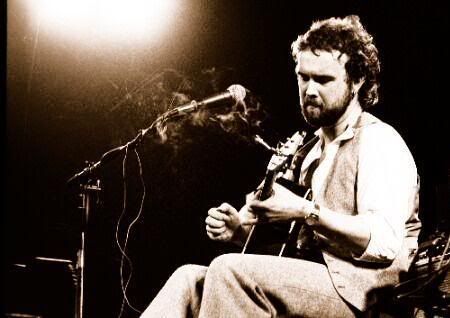
John Martyn (1948-2009).


Tonight fight or fuck someone for John. Or fight AND fuck someone. Or just do as I'm doing: listen to Bless the Weather and think of how improbable a decent cover version of 'Singing in the Rain' must've been. And how astonishing it is.

I was thinking, too, purely as an aside, but relevant, how cold and instantly these websites learn about deaths.  I check Wikipedia, as they update most frequently, and edit for accuracy as often.  But how did this happen?  It is absorbent and multiplicitous, knowing about the crushing acts, not yet of the age to legally drink.  

Anyhow, rest in peace.

Wednesday, January 28, 2009

The walk home thru Heaven on Earth, Bloomfield and the afterhours place ideas.


It could be Bloomfield cast in lead by Anselm Keifer.  Last night or, rather, this morning, around 4:30 when I inched home from a nightcap or so at the Castle the entirety of our neighborhood was encrusted in an infrared ice tundra.  Detailed mottlings of ice rain pools obscured the basic boundaries between curb, sidewalk, Liberty Ave.  It was something.  You might as well nail it above the Squirrel Hill Tunnel:  Pittsburgh:  Where Nothing Beautiful Is Ever Kind. 

Just a quick shot now to cut the heady stuff I've been laying out lately.  Not sure how I feel about it, or what the future will hold.  The frigid assaults on Pittsburgh have awakened a wild Coleridgean energy and on so many fronts I have been exhilarated by new ideas.  Tag along.  

One thing about which I am confident is this Sunday.  The Super Bowl has compelled us to double the Gooski's stock in wings and all things fry-o-latable.  There have been rattlings in my dreams, trying to satisfy some vegetarian friends' game day cravings.  I forecast roasted serrano and baby eggplant involtinis;  a freak show tent cross-pollination of the falafel, hush puppies and beans and rice.  You won't catch me saying it aloud but I think this unnatural fritter will carry the moniker, the Pinto Puppy.  I know, it's fucking silly.   

Omnivorous notions too have abounded.  After nearly a week of brainstorming the very simple concept of the Caesar salad--done right one of my favorite foods, I think I arrived at a nice spin.  Not an innovation exactly, after all a proper Caesar is perfect as it is, more like a pairing:  classic romaine heart, anchovy and parmesan mayonaise dressing with garlic croutons (all par for the course)  heaped alongside grilled flatbread and deep-fried smelts.  To me that's ideal bitter beer drinkin' food.  that's Steelers stomping birdass food.

I'm still trying to refine my pizza crust technique, and am constantly on the lookout for disused bricks to modify Gooski's oven for a better pizza making environment.  That accomplished margheritas and pierogie pies will resume in the chewy glory for which they were conceived and destined.

I'll be trying out several new wing flavors as well.  No hints on those.  Sufficed to say one will be incendiary in nature.  And in general expect to get my ass handed to me at halftime.  I must say little could excite me more.  The aggressive temperament of this winter bodes well, I say, for the Steelers' hopes.  More to the essence it evokes the best of the city.  It snows, it rains, there are golden towels in the air.  When the elements converge it is out of a harsh and most reliable love.


Sunday, January 25, 2009

Even the sunlight was cheap.


I couldn't say what reminded me, but having that itch nearly exclusive to Sundays, I'll write this little chestnut down before the vodka swills and half-remembered blows to the head flush it all away.

This would've been the autumn of 2006.  Miss Kathyrn and I were living on Two Street, Mummers' Row in the heart of old Irish South Philly.  The First Ward.  Pennsport.  Not two blocks from the Riverview movie theater where you can take in a Pixar and get shot by an infant for the same ticket price.  A steal, if that's your thing.  Also we had a Burger King.  Jesus, was it awful.  Anyhow Kate and I liked it and we had some happy times in that place.  

At the time I was working at the law firm of Larrabee, Cunningham & McGowan, P.C..  A terrific bunch of folks who put up with me much longer than I would have.  And given that they paid me a king's ransom (by my math anyhow) I used to spend the liberated evening hour going through the Reading Terminal Market, shopping for the makings of supper, often giving very little regard to what I spent.  At the risk of a digression: Le Bus batards; Salumeria's clotted cream and purple-marbled Roquefort; the cookie & an attiude (the attitude was free),  the rabid octogenarian playing the upright piano as if all music was the embossment of her dream and all the Market was bygone Vienna; the Amish yogurt and raw milk; chickens from Och's; Jill's Cook Book Stall--yes, Kate I did have a kind of crush on Jill, but it was a harmless one; the leeks, Yukons & cipollinis from Iovine Bros.' that became so many a night's copper purees and then the chive ragouts that crowned them, are among not only my fondest memories of the Market, but of Philadelphia on the whole.  Hell, of all my known adulthood of details on the whole!

I don't remember what I bought that day, save for what was jutting out of my book bag.  It was one of those kinds of book bags they only give us city liberals.  You wingnuts don't get them.  To accentuate the elitism and snobbery of my book bag, I'll add that it read the name of the greatest record store on the planet, my former place of employment, A.K.A. Music., where, as we speak A.K.A. Mike is edenically rooted in a Frankie Miller live album, arguing about Slumdog Millionaire with the excellent Tony Creamer.  Oh wait, it's Sunday.  Mary and Mia.  Jesus, Mia's pregant!  

I rely on these details to safeguard the chemistry of nuances.  It's like when you watch Bob Ross paint a picture there comes a time in the execution of each canvas when you caution him, Bob, that color doesn't go there.  That's where the stream yields a tuft of blond grasses, like you said earlier, before you started.  But moments and soft words later the counterintuitive swath of emerald green has fallen behind--that's right, a precise and exemplary tuft of blond grasses.  So please know that it all belongs, and belongs in the order in which it falls.

In those days I rode the old Smiths bike.  A 50's era Ross, doubtless made in Allentown P.A., resembling the regal Raleighs of Nottingham, England.  I remember at first sight of it, thinking of my hero, the great tragic World War I poet, Wilfred Owen, riding across a smoke-buffed moor path with a bag of letters, intelligence and the augured imaginings of fatality and honor that would win him his sad fame.  If I could imagine him there on that Ross--a Raleigh simulacrum, then it was the vehicle for me.  I could, and it was.  Incidentally we called them Smiths bikes because of their profusion in the 1987 music video for The Smiths' "Stop Me If You Think You Think You've Heard This One Before".  Both anglican associations gilded my appreciation, though truthfully neither came so readily to mind as thoughts of excessive violence upon watching a thief in a red sweatshirt ride it past me, the unlatched cord-lock sitting in the wire basket I'd added only days earlier.   You know...

Anyhow, these we're happier times to be sure.  Peeking above the scarlet rim of my tote was a batard, some greens, a white paper wrapped parcel of Luganega sausage--I do remember!--and a slender bouquet of flowers wrapped in green tissue for Kate.  In those times, too, I was better dressed than I am now.  Like the self-portrait galleries showing Rembrandt's rollercoaster of fortune and misfortune, my own is detailed in the sartorial surges and crashes that live in memories.  It was cool enough for a scarf, and this was before that rueful day when Kate gave me the brown corduroy jacket ultimatum.  So there I was, affected and content as could be, pedalling my way down Two Street, a tote brimming with food and flowers, oh, and a 30 pack cube of PBR balanced precariously on my handle bar.  From behind me I heard the acceleration of an engine and as best as I could, I yielded to the unseen auto.  This had to be done cautiously, and yet with enough expedience that the driver would detect my courtesy;  that kind of bike, with that kind of occupant, carrying that kind of tote formed a gestalt portent of Pennsport gentrification.  I was not so well liked by the neighbors.  Nor was Kate.  And she had being pretty on her side.

So there I was, yielding to not just a picture of fourth generation Pennsport stock, but one driving a pickup, more to the point one with that dusty red complexion exclusive to contractors fond of the n word.  He cast me a long unconceding stare.  The thought occurred to me to stop entirely, let him pass as quickly out of sight, and out of the path of confrontation, as possible.  I thought about how old I was, how I'd come to look and act as I did.  I was from people so much like him, and yet I was so unlike him.  I don't mean that in a  judgmental way.  Where did my water diverge from the greater currents?  

The glare seemed to occupy the entire autumn of 2006, when, having slowed to my unsteady bike pace he imparted, "Brother, you are living the dream."

As quickly as that my confidence was restored. I remember finally laying the flowers on the kitchen table, overtop a gas bill.  There was enough light coming off the Delaware to know one object from the next.  But really, that was it. 

Saturday, January 24, 2009

What now.


Could be that it's just
As you left it,
A phrase embodying the dust,
A knockout spell,
Circumstantial to the climate, unnoticed
Bereft, it

Pries to the sun.

Here, listen,
A chorus designed to
Withstand the galing adversaries
Somnolent and externally bummed out
And remind who

Did what to what:

Check the line
Gunning away and left--
Clear the straggling scratch thought
Uplifted by the barking savvy of your balk
Harsh whispers 
Dictate route, shadow and type

To what.

The dust as was auld lang snow, falls, 
Softens the floors.
What was time is time, but it is over:
Go back.  That 
Whine of fingernail calls

Is the crying call. What,

There is no cabinet for the unbleached particulars, 
Darkly bereft of us? 
The last David dies in an   unlit avalanche.
Figures.


Saturday, January 17, 2009

By only beginning and always beginning I refute the way it turns out for me.


Lucian Freud-Double Portrait (British 1988)

I'm escorted by a simple idea.
I say "each day" when I refer to that moment  

I feed the dog.
Each day.

In taking imparticular comfort in my actions
I've already begun to regret the disruption

It is difficult to imagine our not being as we are
And loss and loss decades in the act of preparation.

I know.

I cut a soft-cooked egg into a lump of wet grain
With the back of a spoon,
And her head hovers above the imaginary bowl I think of.
Like if steam constituted an answer:

If I were her this is how I would begin.


Friday, January 16, 2009

Or for the light.


Rest in peace, Andrew Wyeth.  


The Lord of the Earthquake.


(For the bygone mentorship of the 20th century, and colors that don't exist any longer, retained in some movies photographed on auburn film, but veritably lost.)

Year after year  in the Peruvian landscradle
Beyond the llamas and green earthen wands
The mist swafts and anticipated sighs regurgitate:
He is carried on a wave
Of shoulders.

This is a reliable coincidence.

What is prayed for 
Is ecstatically gotten
This year.

Thursday, January 15, 2009

The honey resin.


Edward Steichen untitled photo (American 20th century)


(For my pal, F.A., out west.)

Song is the fantasy of all speaking:

Look and see, reading lips
That Sinatra was singing:
"The fire in your heaaaart"
with lopings rupturing those vein-blue lines
&
Grace restored all eyes to a state of,
Quietly,
Umber poisonous wax on sofa-like bumps
In today's night.

It is no longer used to hurt people;

Ready, but I mean, this soft uncrude stuff
Has been eliminated; now they say it's torture:
People watching with the mute button impushed
And all the candy on the floor from this time.

And all the candy on the floor from last time. 


Sunday, January 11, 2009

Our son.


I've been cruising Craigslist looking for a cd player for the Gooski's kitchen. This morning I came across this ad under the Barter heading. It encapsulates all that is beautiful about Pittsburgh, PA. There is a sense of sacrifice underlying this ad so crisp and true that its worthy of an O Henry story:


I am going to assume we are going to win tomorrow. I am going to post my 2 Lower Level tickets on the 20 yard line up for sale, and I'm sure they will go for a pretty penny. I am interested in an assault rifle. AR15, Mini-14, etc. Email me if you would be interested in a trade. My seats are about 25 rows from the field on the 20 yard line. Home side of the stadium.

GO STEELERS!

Saturday, January 10, 2009

My toothbrush's in there.


To the west there is an ocean.
There's a mountain on the right.
Now will you walk away or take the blame
For the unfortunately named Children of This Day.
Children of This Night.

Some mornings tell you all you need to know about a place.  If you're in the area come to Bloomfield.  I'm having that kind of morning;  I could offer up my services as tour guide of this specific sensation.  Of course it involves characters not present, not all of them, and an ephemeral moment which for all I know has already passed.  But the basic elements are here.  We need another word for poverty though.

The song: "This Night", the artist, Destroyer.

And it started.  I had to run down to the Shur Save to pick up some ingredients for Miss Ella's food.  The butchers, like the sum of the staff at Shur Save are impedimentary in their lack of skill and charm.  For the butchers the former is primary.  But it's cheap, and with a dog who needs to eat basically the diet of a small, picky child the disfigurations of conventional cuts are permissible: I opted for "Chicken for Soup" at approximately $.55 per pound.  Now choosing this cut has its drawbacks.  And they begin the moment selection has occurred; the styrofoam tray is invariably brimming with sticky pink chicken water.  They say technically its not blood.  From a psychological perspective that is instantly reassuring, then troubling.  Lingeringly troubling.  At the check-out counter I warned the cashier about the liquid.  She's going to be touching all Bloomfield's food this morning and the wan pewter cast of her eye suggested the notion of cross-contamination might very well be a foreign one.  Thanks for nothing--she eyed me and the meat with the same revolted wan pewter gaze.  I would've followed up in my defense but there was also something laconic about her.  Like she'd found an insulated space from which to conduct herself.  Her shift had just begun and justification for splitting my discontent between the two of us was simply not to be found.  With sticky hands I counted out exact change and walked away.

Now here's were it becomes, as Phil Simms might say, a Bloomfield kind of morning.

I took a longer way home, cutting back on Ella St. and through the alley to Taylor, then back to Liberty, so I could hear as much of the long "This Night" as possible before reaching my door.  There was just enough residual snow on the ground to be able to say: I walked home in the snow.  In a crosswalk I passed a kid I've run into from time to time, one of those squatter punks who has the appearance of having been tarred but not yet feathered.  Always working on selling you something you could never use--in his case chain-mail jewelry.  Truth be told he was nice and sad, like the right opportunity wouldn't make him any smarter or happier; he'd just stay put and put up with it.  Glad not to have to be suspicious of a good thing.  

On my first day back Jesse and I went out to grab some coffee.  We'd been moving furniture and were pooped from the one-two of manual labor and drugs.  Everytime I move I swear it'll be the last time.  Anyhow there he was.  This tarred punk.   He was grousing about a landlord who'd locked him out over a rent dispute and some unpaid damages.  He said the guy was a cunt and everything would've, from a legal standpoint, fallen cleanly under the heading of normal wear and tear.  But there he was:  "My shit's in there, all my clothes.  My toothbrush's in there."

It was evident that his toothbrush was in there.

Jesse said the guy was nice enough.  He said, "You know, whatever really happened with that apartment, it was his fault."   

Tuesday, January 6, 2009

Haiku.


I have come to regard Twitter as the 21st century answer to the haiku;  the participant is forced to consider and reconsider words at length, re-phrase and patch until what one hopes to express is captured in 140 characters or less.  Of course this can lead to ivy posters, whose banalities cover one's walls.  If you count toilet paper sheets as you peel them off for use it veritably recalls Thoreau's consumer-consciousness, but kindly do not report these statistics.  Not each time at least.

Anyhow, I should hold my tongue, having been more than liberal in my effusions.  Brings me to today's meditation on a Twitter message I composed last night but never sent:  


Dear Morrissey,

I am pleased to see you're interacting with your public.  Given the strand of celebrity you endure it must be difficult to appreciate Twitter intimacies without succumbing under all that heavy-breathing and repetitive ass-kissing. Christ, the volume alone!  That said I find Boz a terrific songwriter, and you, with your voice, perhaps this generation's Dean Martin.  I'm 33 now and have grown sparing with compliments.  May the short math bear out the magnitude of my regards.

My reason for writing--it is quite late here;  if you still live in Rome, as I'd read you did some time back, the evening is only getting started, is silly.  I picture you drinking molasses-colored wine on an oriental rug, eyeing your landscape.  Hopefully you are pleased you decided to keep the gardeners on in the winter--a time, as borne out in Lawrence Weschler's fascinating book, Robert Irwin: Getty Garden, when those activities are most crucial.  Provided you kept them on.  And of course as a former Los Angeles resident the Getty reference was not misspent.  Provided you have a garden.  Hell, regardless.  

A man doesn't need a garden to appreciate a garden.  

There are things at work compelling a person such as me to reach out to a person such as you.  I remember the letter you wrote as a kid to NME snarking on the clique discriminations between glam and punk.  There is no writing without confidence.  And as assuredly as it's the journey not the destination it is the bickering not the resolution.  So thanks for the colors.

This is silly mostly because there is no reason;  I feel like that old man in Jospeh Heller's Catch 22 in the culminating chapter, The Eternal City--and no, come to think of it, the Rome association was not planned.  Anyhow the Americans march in to liberate Italy from  the fascists.  They find a bitter old man who wants no part of it.  He's aware of the downward arc of his culture and finds this imminent salvation both naive and condescending.  He just wants to die already.  I thought of that feeling again several years ago when the Italian journalist, Oriana Fallaci, died.  The way she accelerated a xenophobic agenda towards the end of her life reminded me of so many of the great anti-heroes.  Our love belongs to their confidence, their resolution.  They have seen the last chess moves earlier than the rest of us, and they are not smiling.  The last piece I read about Fallaci (before her 9/16/06 New York Times obituary) was an extensive, highly conflictive biographic study written for The New Yorker.  Ms. Fallaci railed against the Muslim world and its encroachment on continental cultures; it was unselfconscious and sickening.  During the course of the interview the author described how Ms. Fallaci cooked for her, and did so in an almost grandmotherly way, as if demonstrating a nurturing inclination, despite a world view that abraded it.  I bring these things up because they tie your present home soil to a feeling of spiritual decline that permits me to express without known direction, as if it is done blindly or it is not done at all.

What I'm working at is a little ethereal--I'm practically self-hypnotized--though the guys at the bar where I work would just say I'm beat--and I know there is no strategic point to which I'm coming.  This thing is a safeguard against treatises like this.  People must express themselves in haikus to one another.  Regardless of message.  Having arrived without one, and taken up more than my allotted 140 characters in the shake I'll say goodnight.  Good evening.  May your Rome rise from the bickering,  may you have even greater success still with the new record.

Warmest regards,
The auld lang syne.